
Reviving Peace and Security at the UN: UN80 and Beyond
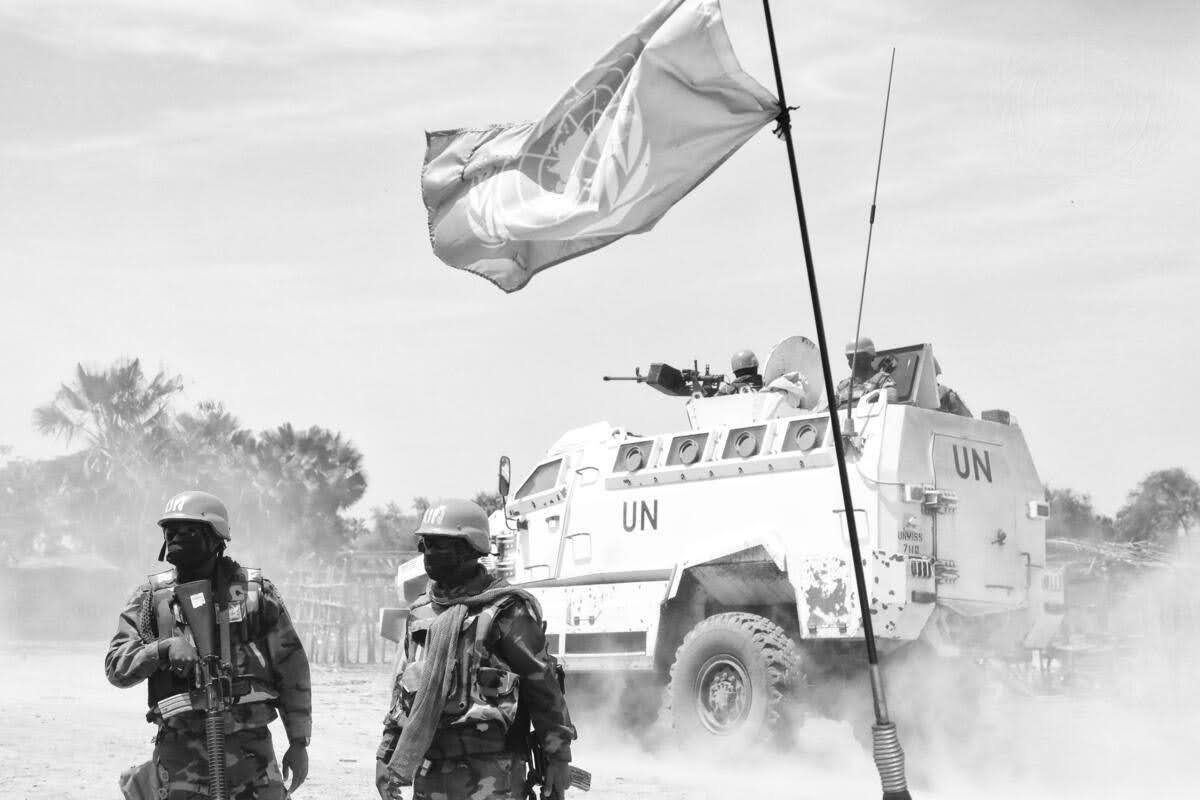
Photo Credit: UN Photo/Nekatrios Markogiannis
The role of the United Nations in promoting peace and security is front and center as geopolitical tensions run hot and the selection process for a new UN Secretary-General is well under way. This report explores the best avenues to make the United Nations more effective in the peace and security space both through UN80 reforms and a number of other means. The report argues that rather than despair about the current state of affairs, those who care about peace have a variety of viable paths to help reinvigorate and modernize the UN’s approach to one of its core responsibilities. Drawing on recent examples of focused and innovative UN engagement, it identifies practical ways for the organization to exercise its political role more effectively, make better use of capabilities across the UN system, and adapt its peace and security approaches to a changing conflict landscape.
Introduction: A Difficult Landscape
The United Nations (UN) was created, even as the tail end of World War II raged on, because of the collective belief that the world needed a body to help prevent such horrors from recurring. And perhaps no issue is more powerful in shaping perception of the UN than its relative effectiveness in addressing the core peace and security issues of the day.
Thus, it is no surprise that more and more people are questioning if the UN is fit for purpose at the current historical moment. International norms, particularly in peace and security, have been beset from numerous angles as the traditional rules-based order faces challenge after challenge.
The list of challenges is a long and familiar one: Ukraine, Gaza, the Strait of Hormuz, Sudan, Myanmar, the Democratic Republic of Congo, and beyond. And while almost all countries believe the UN, at least in theory, should play a central role in addressing peace and security issues, there is almost equally wide consensus that it is not currently doing so effectively. The question then becomes twofold: why has the UN found itself increasingly marginalized on peace and security issues, and how do we change that moving forward?
Importantly, the findings of this report make the case that there is no single silver bullet for restoring the UN’s role in peace and security but, instead, a series of specific, discrete steps that, if taken together, would lead to substantial improvement. By its nature, peace and security is less an architectural issue in the way that we think about overlap of responsibilities in areas like food policy or humanitarian relief —where multiple agencies are charged with common agendas— and more a matter of how the UN uses and maximizes the tools it already has in ways that are both more attuned to today’s challenges and, potentially, more effective. This, in turn, has important implications for the UN80 reform initiative, the selection of the new Secretary-General, and the new Secretary-General’s approach to peace and security.
While Member States ultimately determine the political space available for UN action on peace and security, the sitting Secretary-General’s personal approach, philosophy, and choices are critical in shaping how effectively the UN exercises its good offices and political role. And, unfortunately, the perception is that current Secretary-General António Guterres has been reluctant to make big bets and expend considerable political capital on conflict mediation and resolution. Some, including perhaps the Secretary-General himself, would argue that this is simply a regrettable reality of the current era of geopolitical tensions and great power willingness to break the rules.
As has been widely noted, Guterres seemed more willing to personally engage in some specific peace and security issues during his first term, such as Libya and Cyprus, but his efforts in both cases largely fell flat. These experiences, combined with the broader geopolitical environment, seem to have led the current Secretary-General to view peace and security issues as more of a risk than an opportunity for the UN .
As Daniel Forti of the International Crisis Group observed,
In 2024, Guterres declined to consider an expanded operational presence for the UN in Sudan, including with the AU, despite an explicit Council request that the organisation propose ways to protect Sudanese civilians. A few months later, he instructed UN officials not to consider a new peacekeeping operation for Haiti as part of the “full range of options” that the Council requested of the Secretariat; the UN instead presented a single option for a logistics office to backstop the now defunct Kenyan-led police force. Throughout the war in Ukraine to date, Guterres has prevented UN officials from conducting scenario planning for a possible UN ceasefire monitoring mission in the absence of explicit requests from either Kyiv or Moscow.¹
In essence, the UN has at times contributed to its own marginalization when its services are needed the most. The Secretary-General, to all outward appearances and while obviously well-intentioned, has not been effective in wrangling the five permanent members of the Security Council (P5) on the most pressing security issues of the day, and he does not have a strong bench of expertise on peace and security among his most senior advisors. There is also little sense that the Secretary-General and the UN have set clear priorities as to where their role could be the most effective and where they feel they have less value added.
Three Examples of Innovative Approaches to Peace and Security
This is not to say that there have not been some noteworthy successes on peace and security in recent years, including during this Secretary-General’s term.
The Organization for the Prohibition of Chemical Weapons (OPCW)–UN Joint Mission in Syria was established in 2013 following a major chemical weapons attack in that country and the U.S.-Russian diplomatic framework that was subsequently agreed on the elimination of Syria’s chemical weapons program. Operating under Security Council Resolution 2118, the UN and OPCW deployed a small, specialized team of experts to coordinate the verification, removal, and destruction of Syria’s declared chemical weapons stockpiles, in an effort that also involved multiple countries. The Mission concluded in 2014 after completing the removal and destruction of approximately 1,300 metric tons of chemical agents and precursor chemicals. It was succeeded by an OPCW Fact-Finding Mission and a Security Council-mandated Joint Investigative Mechanism (JIM) tasked with investigating ongoing allegations of chemical attacks. Because the JIM was empowered to attribute responsibility for chemical attacks, it soon became more politically contentious, and its mandate was not renewed in 2017 following a Russian veto in the Council.
In 2016, at the request of the Government of Yemen, the UN established the UN Verification and Inspection Mechanism for Yemen (UNVIM),a lean technical mechanism coordinated by the UN Office for Project Services (UNOPS) to inspect commercial shipping bound for Yemen in order to facilitate shipping and humanitarian access, while ensuring the Security Council-mandated arms embargo was not violated. Based in Djibouti, the mechanism has helped preserve a channel for imports into Yemen —especially food, fuel, and other essential goods— by providing a predictable clearance mechanism for vessels bound for Yemeni Red Sea ports. UNVIM remains an active, light operational tool within the UN’s Yemen response architecture.
Arguably the most successful effort in peace and security during Guterres’s second term was the Black Sea Grain Initiative, through which the UN and Türkiye facilitated parallel agreements with Russia and Ukraine that enabled the export of millions of tons of grain through the Black Sea despite the ongoing war. The initiative combined focused high-level diplomacy with practical technical arrangements, including the establishment of a Joint Coordination Centre in Istanbul, staffed by representatives of the UN, Türkiye, Russia and Ukraine, to oversee vessel inspections and transit procedures. Supported by expertise from the UN Conference on Trade and Development (UNCTAD), the World Food Programme (WFP), and other actors, the initiative facilitated the export of more than 30 million metric tons of grain and related food products —thus helping stabilize global food prices— before Russia withdrew from the arrangement in 2023.
Looking forward, there are promising commonalities from these three examples: all relied on technical expertise drawn from different parts of the UN system. All were lean, rapidly-deployed efforts with focused mandates. All three efforts were deployed amid ongoing conflict.
Notably, neither the Black Sea Grain Initiative nor the UNVIM emerged from a Security Council mandate, illustrating the latitude the Secretary-General and the UN system can have in promoting focused operational efforts in the peace and security sphere, including outside traditional mission structures. The Black Sea deal is also instructive because negotiators were able to align tangible interests for all parties involved while simultaneously addressing a global problem with significant humanitarian and economic implications.
Taken together, the three examples reflect a pragmatic recognition by the UN that, while it may not be well positioned to resolve the broader conflicts, it can identify what is politically achievable in a given context and provide meaningful value by helping the parties construct a workable technical process around a defined issue, engaging relevant regional actors, and delivering concrete agreements with measurable impact.
Finally, all three cases received limited public attention, as media coverage and political debate often focus more on the UN's failure to resolve major conflicts in their entirety than on operational successes that mitigate some of their potentially gravest humanitarian impacts. Member States themselves are also often quick to measure the UN against broader outcomes — such as ending wars altogether — while not sufficiently recognizing the value of such focused initiatives that successfully address specific dimensions of a conflict and which, ideally, can open up space for further dialogue or diplomatic progress. The Black Sea Grain Initiative, UNVIM, and the OPCW-UN Joint Mission demonstrate that, even in highly polarized geopolitical environments, the UN can still play a meaningful role as a convener, technical intermediary, and operational platform capable of delivering concrete results with global impact.
Bearing these examples in mind, let us turn to the most promising avenues to improve the UN’s performance on peace and security issues moving forward.
The New Secretary-General and Political Leadership in Peace and Security
The appointment of the next Secretary-General allows for an important moment to not only have someone with specific skills in peacebuilding, negotiation, and prevention lead the Organization, but to have someone who will foster a culture at the UN that places a premium on advancing peace. The next Secretary-General should, first and foremost, be a political actor and mediator, a savvy diplomat capable of exercising moral authority grounded in the Charter and re-establishing the UN’s role in conflict prevention and mediation. They will also need the capacity to sit with presidents and prime ministers as a peer. The role of Secretary-General has become increasingly mired in bureaucratic and administrative functions, and some of those responsibilities should be relegated to deputies.
While no one will likely check all these boxes, the factors below are all frequently cited as being well within the Secretary-General’s direct ambit and that can have a powerful positive influence on promoting peace.
Surround yourself with good people. Senior-level appointments are critical. Yes, the next Secretary-General will need to maintain a geographic balance and take Member State input on appointments, but they must not simply accept what is offered or accept crony appointments. To be effective in advancing peace, the Secretary-General needs a well-run, talented team of diplomatic professionals close at hand. This includes decisions on the Chef de Cabinet, the Deputy Secretary-General, and the various Under- and Assistant Secretaries-General. For instance, an effective Chef de Cabinet is critical; they are the traffic controller managing Under-Secretaries and the Secretariat, including information flow and decision-making processes, so that the Secretary-General can focus on core public diplomatic and good offices duties. This also means having a willingness to listen to those people around you to tap into their expertise and networks –one of the most important skills in advancing peace.
Too often, the current UN leadership has operated as if in a vacuum. The best Secretaries-General have had informal kitchen cabinets of trusted aides and advisors they were able to dispatch quickly, and with delegated authority, to mediate in conflict situations. For example, Dag Hammarskjöld had Ralphe Bunche and Brian Urquhart. Similarly, Giandomenico Picco was instrumental to Javier Pérez de Cuéllar’s efforts to solve the Iran-Iraq War, the diplomatic crisis between France and New Zealand on the bombing of the Rainbow Warrior, and to secure the release of Western hostages from Hezbollah. He did so first within Pérez de Cuéllar’s Executive Office and only afterwards as Assistant Secretary-General for Political Affairs. And Álvaro de Soto was Pérez de Cuéllar’s point person for several high-profile mediation efforts, including the Central American peace processes.
In addition, the UN needs to do a better job of cultivating and training such effective mediators and negotiators. While the UN’s Mediation Support Unit and Standby Team of Senior Mediation Advisors are seen as effective mechanisms for specialized support and capacity-building, they are mandated to focus on technical and process expertise not to manage negotiations.
Engage the P5 more closely in New York and —importantly— in capitals. While the current historical moment may seem dire, we should not forget that managing great power tensions has been a requirement for a Secretary-General from the moment the United Nations was created. One could argue that helping ease relations within the P5 not only comes with the job of the Secretary-General, but is perhaps one of its most important requirements. Making Member States work together is the essential point of multilateralism. Global powers will always, when they feel they need to, act outside the system. Yet there is value in a system that keeps them tied into the international community. An effective Secretary-General is one who is able to speak to the key players, listen, and entrepreneurially identify mutual interests that will help foster peace and prevent conflict, like Secretary-General Guterres and his team did on the Black Sea Grain Initiative. It is hard to stress enough how much the Secretary-General needs to build relationships and rapport with leaders from the beginning of their term. Diplomacy is ultimately deeply personal, and heads of state will only take a call from the Secretary-General during a crisis if they already have an existing relationship. Prevention and mediation are more likely to succeed when you have accumulated political capital.
Be willing to take risks... You don’t achieve peace without a willingness to embrace risk, and a Secretary-General who cares about peace will need a demonstrated track record of risk-taking, both personal and political. Indeed, the UN has now become so cautious on issues of peace and security that it faces a danger of irrelevance. This does not mean that an Secretary-General needs to take risks blindly, but that they are willing to take calculated risks based on good political judgement, and also to act independently within the authority they are granted under the UN Charter, such as Guterres did on the Black Sea. In a fast-moving world where prevention is at a premium, the Secretary-General simply cannot spend all of their time waiting for full Security Council consensus or a specific mandate before they act. Indeed, Article 99 of the UN Charter makes clear that the Secretary-General can bring any matter that threatens the maintenance of international peace and security. “It is Article 99 more than any other which was considered by the drafters of the Charter to have transformed the Secretary-General of the United Nations from a purely administrative official to one with an explicit political responsibility,” observed former Secretary-General Dag Hammarskjöld.²
..but choose your battles. Given the depth and breadth of current international conflicts, the next Secretary-General will also need to ruthlessly prioritize and engage where they feel the UN can make the most difference. The wisdom of such an approach is also well-supported by the historical record. Former Secretary-Generals, including U Thant and Javier Pérez de Cuéllar, played pivotal, but often overlooked roles, in solving major international crises because they were strategic, discrete, and selective in how they engaged. Both had close relationships with world leaders and inserted themselves into complex political problems, but they also did not try to solve every problem in the world. They sometimes pushed back on the permanent members of the Security Council, but avoided alienating them to a degree that it resulted in a lasting rupture.
Lean into prevention and mediation. An entrepreneurial, politically-present UN will find opportunities for increased engagement in the peace and security space. The UN needs to think more strategically about how it can add value to resolve a crisis, but —perhaps more importantly— act before a potential crisis erupts. Doing so requires strong conflict analysis skills, effective early warning mechanisms, and the ability to translate information from these products into meaningful diplomatic action. It also means using available resources not just from the Secretariat but also the rest of the UN System, as was done successfully in the three examples above. And it entails engaging frequently with Member States, traveling or sending envoys to potential areas of conflict, and reinvigorating the ability and morale of the UN staff.
It is fundamental to note that, even with the best Secretary-General in office, he or she will only be able to play a renewed role in peace and security matters, if she or he can count on solid political support from Member States. A good number of Member States, including several P5, have called for the new Secretary-General to focus more on peace and security, but reasserting the UN’s role in mediation and conflict resolution will require not only an empowered and able Secretary-General who is willing to take risks, but a coalition of states willing to actively back a more assertive and active Secretary-General.
A Shift in Peace Operations
While creating a culture at the UN that is willing to tackle the hard issues of peace and security is an important first step, to be effective in doing so also requires recognizing that the international landscape has changed dramatically and so must the tools that the UN can use to promote peace in this landscape, including its peace operations.
Part of this requires reconsidering the role of the multidimensional peacekeeping operations (PKOs) with which the UN is most closely associated. Multidimensional peacekeeping emerged in the post-Cold War period, when a wave of countries were consumed by civil war, internal strife and state collapse. Large and complex PKOs were deployed to undertake a broad range of responsibilities ranging from monitoring human rights, to advancing election preparations and security sector reform, among many others. The UN, with mixed results, was essentially being called upon to fill the vacuum which a country’s government would normally provide.
Over time, mandates for these operations began to become "Christmas trees" with many specific niche activities that diluted the core political work of the missions and many of which, arguably, were better addressed by other parts of the UN system. As missions grew in size and complexity, the Special Representatives of the Secretary-General (SRSGs) who head these peacekeeping operations increasingly found themselves having to manage the demands of managing large administrative structures, which placed a burden on their capacity to focus on diplomatic and political engagement. In some ways, bureaucracy began to somewhat crowd out diplomacy.
Many peacekeeping operations were also increasingly tasked with operating in active conflict environments and with mandates to protect civilians and support stabilization efforts that required a more robust use of force than traditional peacekeeping had envisioned. The record of these efforts was uneven, as missions increasingly found themselves caught between expectations that they would stabilize situations on the ground and the reality that lasting stability ultimately depended on political solutions.
By the late 2000s and 2010s, the UN began to increasingly rely on special political missions (SPMs): smaller civilian missions with primarily political and advisory mandates. This reflected several trends, including a growing recognition that many situations required sustained political engagement rather than large peacekeeping deployments, as well as increasing reluctance by some host governments to accept large PKOs. In this context, the UN increasingly organized its peace and security architecture around a distinction between peacekeeping (managed by the Department of Peacekeeping Operations) and special envoys and special political missions (managed by the Department of Political Affairs).
We are now seeing a resurgence of conflicts between states, and between states and other actors, where there is a higher premium on mediation and negotiation, and considerably less latitude (or appetite within the Security Council) for missions that involve thousands of people with troop contributions from multiple countries and often lack a clear end date. This is even more true given the severe budget crunch currently faced by the UN. The last multidimensional peacekeeping mission authorized by the Security Council, MINUSCA in the Central African Republic, was launched in 2014.
Alongside the growth of special political missions, the UN also established a small number of regional offices with political mandates focused on regional engagement, mediation, and good offices: the UN Office for West Africa and the Sahel (UNOWAS) was established in 2002 (and expanded in 2016), the UN Regional Centre for Preventive Diplomacy for Central Asia (UNRCCA) in 2007, and the UN Regional Office for Central Africa (UNOCA) in 2011. Their role in conflict prevention and mediation is often underappreciated. UNOWAS, for example, has been able to engage in sensitive political developments —including in countries not on the Security Council's agenda— such as electoral tensions, unconstitutional changes of government, and regional spillover risks across the Sahel and West Africa. Successive SRSGs have played important quiet diplomatic roles alongside ECOWAS and the African Union in contexts such as Burkina Faso, Guinea, and The Gambia. While there is likely to be limited appetite among Member States to create additional regional political offices, the experience of UNOWAS demonstrates that relatively lean, politically agile regional presences can provide the UN with a tool for early engagement, conflict prevention, and support to regional mediation efforts. That said, the impact should not be over-stated and the general security climate in West Africa remains deeply concerning.
Special envoys represent another important tool within the UN’s peace and security architecture. Unlike peacekeeping operations or even most special political missions, envoys operate with very small teams and highly focused mandates centered on mediation, good offices, and support to peace processes.
Haiti provides another example of the UN’s evolving approach to peace operations. Following the closure of the UN Stabilization Mission in Haiti (MINUSTAH) in 2017, the UN shifted toward lighter political engagement through the UN Integrated Office in Haiti (BINUH), established by the Security Council in 2019 with a mandate focused on good offices and political dialogue. Security conditions continued to deteriorate and, in 2023, the Council authorized the Kenya-led Multinational Security Support (MSS) mission to assist the Haitian National Police in responding to escalating gang violence.
However, the MSS faced persistent shortfalls in personnel, equipment, financing, and operational capacity. In September 2025, the Council authorized the transition from the MSS into a more robust Gang Suppression Force (GSF), with an authorized strength of up to 5,500 military and police personnel and a mandate to conduct security operations against armed gangs. The Council also established the UN Support Office in Haiti (UNSOH) to provide logistical and administrative support to the GSF and BINUH. Resolution 2793 —which established the GSF and UNSOH— was not without controversy. China, Pakistan, and Russia abstained, expressing concerns about the proposed model, including questions related to financing, accountability, and the viability of the proposed arrangement.
The resulting configuration in Haiti thus consists of BINUH, a special political mission that provides political engagement and good offices; the GSF, a multinational force outside UN command that undertakes security operations; and UNSOH, a UN support office that provides operational support to the GSF. This arrangement bears some resemblance to the configuration that evolved in Somalia, in which a UN political mission (UNSOM, which transitioned into UNTMIS and is expected to close in October 2026), an African Union-led security operation (AMISOM/ATMIS, now AUSSOM), and a UN logistical support office (UNSOA/UNSOS) perform similarly distinct but complementary functions. Although the two cases differ in important respects, both illustrate how political engagement, security operations, and operational support can be distributed across separate but mutually reinforcing entities.
It remains too early to assess the effectiveness of this approach. Haiti continues to face profound political, institutional, and security challenges, and the success of this new arrangement will ultimately depend not only on security gains but also on the gradual restoration of effective governance and state authority. Additionally, the use of Security Council-authorized peace enforcement operations has revived longstanding debates on accountability, oversight, and respect for international human rights standards.
The Haitian government’s increasing reliance on private security companies further illustrates the increasingly complex ecosystems within which some contemporary peace operations operate. Their growing role raises additional questions regarding the risks associated with the outsourcing of coercive security functions in contexts where UN operations increasingly operate alongside bilateral, regional, and private security actors, as has also been evident in Mali and the Central African Republic.
The different tools discussed above, together with examples such as the Black Sea Grain Initiative, UNVIM, and the OPCW-UN Joint Mission in Syria, illustrate the increasingly diverse range of instruments available to the UN in support of peace and security, as well as some of the challenges associated with them. Faced with changing conflict dynamics, the mixed experiences and increasing skepticism toward large PKOs, and mounting financial pressures, the overall trajectory appears to be toward leaner, more agile, and more tailored forms of engagement. Many of these approaches combine political, technical, and operational expertise in ways that allow the UN to respond to specific challenges and opportunities without necessarily requiring large mission presences, long-term deployments, or extensive resources, although the track record in shaping long-term political gains is mixed.
However, the UN’s financing architecture has not fully adapted to the growing diversity of tools in the peace and security toolbox. Peacekeeping operations are funded through a dedicated assessed peacekeeping budget, while special political missions are financed through the regular budget, and many prevention and mediation capacities depend heavily on voluntary contributions. These distinctions reflected an earlier period when peacekeeping, political engagement, and prevention were viewed as largely separate functions. Many observers argue that the financing architecture has not kept pace with the evolution of the UN’s peace and security toolkit and continues to reinforce distinctions that are becoming less relevant in practice. As Eugene Chen argues, the maintenance of an “arbitrary firewall” between regular budget functions and account-funded capacities “exacerbates the turf wars between DPPA and DPO while also reinforcing the counterproductive distinction between peacekeeping operations and special political missions that prevents the UN from being able to draw upon a full spectrum of peace operations.”
Reflecting the broad shifts mentioned in this section, Member States requested in the Pact of the Future that the Secretary-General present a review of the future of UN peace operations, which is expected in July 2026.
A More Crowded Field of Mediators
Given the current environment, the ability of the UN to rapidly deploy talented and relatively empowered special envoys and small teams of technical experts is of obvious utility. But this shift from what one might call a mission-centric approach to more of an envoy-centric one is not without its own complications.
As the UN, willingly or unwillingly, ceded considerable space in the peace and security arena over the last decade, other actors have crowded in, and we will not be returning to an environment where warring parties simply defer to the UN as the only mediators available. The African Union and the various subregional organizations, rather than the UN, are now often the first resort for those looking to advance peacekeeping or peacebuilding on the continent. The Association of Southeast Asian Nations (ASEAN) has also begun taking a more active mediation role in that region; for example, in the border clashes between Thailand and Cambodia (in this latter case, including the deployment of a small ceasefire monitoring mission).
In addition to regional and subregional organizations, individual countries have also entered the mediation space. As the European Council on Foreign Relations recently noted,
The rise of the new mediators is a product of a more multipolar world, where countries such as Qatar and Türkiye can present themselves as interlocutors with links across troubled regions. They maintain ties with countries like Russia and channels with non-state groups such as Hamas and Hezbollah that Western countries regard as adversaries or designate as terrorist. At the same time, these rising mediators offer a different style of conflict resolution: more informal and personalistic than the process-driven approaches that Europeans typically favor. Their rise has come as conflicts become more complex and the scope for comprehensive settlements narrows.³
Again, this is not necessarily a negative trend. Qatar, Türkiye, Norway, and Pakistan have all made crucial efforts to de-escalate conflicts in recent years. For the UN to have more diplomatic channels and interlocutors with which it can partner —many of them with unique historical and personal relationships with parties to a conflict— is a powerful tool in the right set of hands. This opens up a variety of back channels and creative approaches to problem solving. At the same time, it is also important to note that regional or Member State mediators may in some cases be parties to regional power dynamics or have direct interests that could affect their neutrality.
At times, the proliferation of mediators can result in fragmentation and coordination issues. The most complicated example is perhaps the situation in the Democratic Republic of Congo, where there are currently six different mediation tracks (the Luanda Process, the Nairobi Process, the Doha Process, the Washington Accords, an African Union mediator, and UN engagement). Even UN engagement is multi-track, with an SRSG for the UN peacekeeping operation (MONUSCO), an Envoy for the Great Lakes Region, and the UN Office in Central Africa (in this case, there is an ongoing effort as part of UN80 to “streamline” the functions of the Special Envoy with UNOCA).
While the efforts of these organizations and Member States are at times halting, the growing diversification of mediation actors is in many ways a positive development and the UN’s approaches will need to effectively dovetail with these regional efforts.This may also imply that the UN needs to become more comfortable and nimble, serving as a resource rather than being the focal point or lead in negotiations. In some cases, it may make sense for the UN to provide what are effectively advanced technical, advisory and secretariat services for negotiators from well-positioned individual nations or regional blocs. This would give regional negotiators more heft and an infusion of expertise on some of the most complex issues they face, while smoothing the way for multilateral support and facilitation of any subsequent agreements. The UN’s comparative advantage may increasingly lie in supporting and amplifying regional diplomacy rather than always leading it directly.
In this context, the UN’s Mediation Support Unit (MSU) and Standby Team of Senior Mediation Advisors remain important institutional assets that can support regional organizations and Member-State mediators. These mechanisms have contributed technical and process support to peace efforts in contexts such as Yemen, Syria, Sudan, Mali, and the Great Lakes region. Some observers argue, however, that these capacities could be more closely integrated into senior political engagement and mediation efforts.
Early Warning and Prevention
While diplomacy to end conflicts naturally dominates attention and headlines, efforts to prevent conflicts from occurring in the first place are equally crucial and often under-appreciated. Prevention work is also difficult to assess because it calls for measuring events which didn’t happen. Although the UN has significantly expanded its early warning capacities over the past decade —particularly through efforts to better integrate political, development, humanitarian, and human rights analysis— translating early warning into timely preventive action remains a persistent challenge.
The UN does not have a formal “prevention architecture” comparable to its peacekeeping structures. One of its principal internal prevention mechanisms is the Regional Monthly Reviews (RMRs) process: an inter-agency analysis and decision-making process jointly led by DPPA and the UN Development Programme (UNDP) that brings together over a dozen agencies and headquarters actors to identify and assess emerging political and conflict risks, primarily at the country-level but also regionally and thematically. The goal is to create shared situational awareness across the UN system and identify opportunities for preventive engagement before crises escalate. In several cases, RMR analysis has reportedly anticipated conflict trajectories with striking accuracy.
The challenge, however, appears to be how to translate this analysis into timely political and programmatic action. The RMR process regularly generates recommendations ranging from political engagement with national stakeholders to adjustments to UN programming. Follow-up on country-level recommendations frequently depends on whether UN Country Teams and agencies have sufficiently flexible resources and mandates to redirect programming toward prevention objectives —something that may be difficult due to political sensitivities, pre-committed funding streams, or agency performance frameworks tied to existing programmatic deliverables. Recommendations for higher-level political engagement, meanwhile, require support and follow-through from senior UN leadership, which has at times been uneven or inconsistent.
In 2017–2018, as part of his reforms to both the UN development system and the peace and security pillar, Secretary-General Guterres proposed strengthening the role of Resident Coordinators (RCs) in early warning and conflict prevention, particularly in countries without UN political or peacekeeping missions. The underlying premise was that RCs, as the UN’s principal presence on the ground in many countries, were well placed to identify emerging risks and help mobilize preventive action by linking political, development, humanitarian, and human rights analysis. Many Member States, however, resisted what they viewed as a possible expansion of UN political engagement without explicit host-country consent. Some critics also warned that the approach risks blurring the distinction between development coordination and political work. Moreover, RC engagement on prevention issues often depends on whether they receive sufficient political backing and support from Headquarters leadership.
Relatedly, the UNDP-DPPA Joint Programme on Building National Capacities for Conflict Prevention has become one of the UN’s principal mechanisms for advancing the prevention agenda, including through the deployment of Peace and Development Advisors (PDAs) embedded within UN Country Teams in selected countries, to provide conflict analysis, prevention support, and early warning capacity. In addition to country-level PDAs, the Joint Programme also includes regional programme specialists in locations such as Amman, Bangkok, Dakar, Istanbul, Nairobi, and Panama City that support regional analysis and potential regional prevention efforts. However, recent budgetary pressures have resulted in significant reductions to the PDA system, including regional capacities.
Many contemporary conflict drivers are regional or transnational in nature; however, much of the UN’s early warning and prevention-related tools remain largely country-based, including RCs, UN Country Teams, and much of the RMR process itself. Existing regional coordination mechanisms, including the UN Regional Collaborative Platforms and the Joint Programme’s regional PDA capacities, may provide opportunities for greater coordination among RCs and UN Country Teams on cross-border risks and conflict drivers. For example, the Regional Collaborative Platform for Latin America and the Caribbean, based in Panama, has helped support greater regional coordination on issues related to cross-border migration flows. As part of the UN80 reform process, the Secretary-General has proposed strengthening regional prevention capacities, including through the possible deployment of PDAs to the Regional Economic Commissions, which could strengthen conflict analysis at the regional level.
These efforts to strengthen integrated analysis, prevention, and regional engagement also raise broader questions regarding the division of responsibilities between DPPA and DPO within the UN peace and security pillar. Guterres’s 2019 peace and security reforms attempted to break down institutional silos between the two by creating integrated regional divisions and regional Assistant Secretary-General structures spanning both departments. Currently, there are two of these ASGs, one for Africa and one for the rest of the world. While the reforms seem to have improved coordination, information-sharing and conflict analysis, many observers argue that they stopped short of fundamentally reshaping how the UN conducts political engagement and prevention. Importantly, these structures remain primarily focused on Headquarters-level coordination rather than direct mediation or field-based diplomacy, functions that continue to rest largely with special envoys, SRSGs, and regional political offices. Moreover, the line between “political” and “operational” work that traditionally separated DPO and DPPA has become less clear-cut, particularly as the UN increasingly relies on lighter footprint approaches.
Prevention: The Gap between Rhetoric and Reality
Member States generally endorse prevention and early warning and some often criticize the UN for not doing more on this, yet their rhetorical commitment is often not matched by political or financial support. First, as mentioned elsewhere, many Member States quickly become uneasy with early warning and prevention efforts if it involves their own countries or if it touches upon their direct interests. In addition to the resistance to the possibility of RCs having more political engagement, another example is when, in the early 2010s, the United Kingdom had the initiative to have monthly “horizon scanning” sessions during closed Security Council consultations with the Department of Political Affairs (now DPPA). The initiative eventually faded amid resistance from some Council members who viewed such discussions as politically sensitive, as well as concerns among other Member States that situations in their countries could be discussed.
Second, Member States’ rhetorical commitment to prevention and mediation is also unmatched by funding realities. Most of DPPA’s prevention, early warning and mediation capacities are financed outside of the regular budget, a baffling approach given how central these are to the UN’s core mission. In 2023, the Department’s Multi-Year Appeal —which finances a substantial share of its mediation and prevention work— fell roughly 24 percent short of its funding target, forcing DPPA to draw on cash reserves and to scale back activities.
The General Assembly’s Role
Persistent Security Council paralysis on major conflict situations has generated widespread frustration across much of the international community. Immediate prospects for Security Council reform are dim, as is the possibility floated by some actors of reopening the UN Charter. Such an effort would carry significant risks, including weakening commitment to the existing Charter framework or even driving one or more permanent members away from the UN system altogether.
As Security Council divisions have deepened, many Member States have increasingly turned to the General Assembly and other multilateral mechanisms to advance political, accountability, and rule-of-law initiatives. While the General Assembly cannot replace the Security Council’s enforcement powers, it has at times served as an alternative forum for collective legitimacy and institutional innovation. Recent examples include the Liechtenstein-led initiative automatically triggering a General Assembly debate following the use of a veto in the Security Council, as well as continued support for the French-Mexican initiative calling for voluntary veto restraint in situations involving mass atrocities. The General Assembly should continue to explore options that allow them to work in concert to impose reputational, economic, and political consequences when key norms are violated to make clear that Charter rules are not optional. The Starling Institute is currently part of discussions about collective counter-measures that Member States could consider to defend the Charter’s prohibition on the use of forceCharter’s prohibition on the use of force without Security Council authorization.
In some cases, Member States have also used the General Assembly, as well as the Human Rights Council, to establish accountability mechanisms despite Security Council deadlock. In 2016, the General Assembly created the International, Impartial and Independent Mechanism (IIIM) to collect and preserve evidence of serious crimes committed in Syria. Similarly, the Human Rights Council established the Independent Investigative Mechanism for Myanmar (IIMM) in 2018, with the General Assembly subsequently welcoming its establishment and calling for its prompt and effective operationalization. In the case of Ukraine, Member States have pursued alternative pathways outside the UN framework, including the Council of Europe-based Register of Damage and the proposed Special Tribunal for the Crime of Aggression against Ukraine. Although these initiatives are outside the United Nations framework, both of them reflect efforts by a group of Member States to translate the principles articulated in successive General Assembly resolutions on Ukraine into practical accountability mechanisms. Together, these efforts regarding Syria, Myanmar and Ukraine demonstrate that Security Council paralysis does not necessarily foreclose all multilateral avenues for legitimacy, investigation, and accountability.
The UN80 Reform Process and Peace and Security
It is also important to note the ongoing efforts to modernize the UN’s approach to peace and security through the UN80 reform process and how those efforts are being shaped by ongoing budget woes at the UN.
The initial UN80 report called for an approach that was “lean, agile, and field-focused,” but applied a very narrow aperture to the issues it placed on the table for such reforms⁴, in part because the Secretary-General’s report on the future of UN peace operations was due in June. The initial UN80 report also called for establishing a centralized Center of Excellence on Women, Peace, and Security, and another one on Prevention, Peacebuilding, and Peace Support. These proposed “Centers of Excellence” were envisioned primarily as centralized support hubs for policy guidance, technical expertise and training. Neither proposal seems to have gained traction.
The report also suggested that UN80 would reorganize the Departments of Peace Operations and Political and Peacebuilding Affairs, although how it would do so was left rather murky. The Office of Rule of Law and Security Institutions was abolished, with many of its functions absorbed by the DPO and DPPA. Efforts are underway to establish a unified Peacebuilding and Peace Support Office (PBPSO), with a comprehensive mapping of PBPSO surge capacities expected as part of the Secretary-General’s July 2026 information brief on the UN80 process.
These proposed changes are seen by many commentators as rather modest in scope rather than genuine efforts to transform how the UN does business on this front. “Many of these changes are common-sense adjustments that the departments have resisted for years,” argued Eugene Chen, “but overall, the adjustments continue to be driven by a desire to maintain the status quo and retain staff; they are not underpinned by a coherent vision for the future of peace operations.”⁵ In particular, Chen notes that the restructuring of DPPA and DPO, while eliminating 125 posts, was designed more to take advantage of the fact that many of these posts were already vacant rather than to produce a more coherent organigram capable of meeting current challenges. That said, as mentioned earlier, information-sharing and collaborative analysis between the DPPA and DPO does appear to have improved.
The lack of ambition of the current slate of UN80 reforms in the peace and security pillar stands in stark contrast to the scale of the UN’s budget problems. Secretary-General Guterres has repeatedly spoken out about the seriousness of the cash crunch, which has been only partially alleviated by the United States’ recent payment of $1.8 billion in humanitarian funding (the U.S. still remains roughly $2 billion in arrears). While the UN has already implemented broad 20 percent across-the-board cuts in many areas, the United States continues to push for an additional 10 percent reduction in peacekeeping budgets and further troop reductions from some missions. At the same time, Washington has sought to more directly target its budget support toward specific activities and country situations, while objecting to the Secretary-General’s use of single-donor trust funds —a move widely interpreted as directed at China’s peacebuilding support mechanisms.
Conclusion and Recommendations
As the above analysis has shown, the UN does not face a crisis in peace and security because it lacks tools at its disposal. Rather, it has too often been constrained by Member States’ failure to consistently provide the political backing and financing needed for effective prevention and mediation, as well as by a risk-averse institutional culture within the Secretariat. Nevertheless, the UN remains uniquely positioned to convene, legitimize, and support peace efforts. To reclaim that role, it will need to become more politically entrepreneurial, more innovative in the use of its political, technical and operational tools, and strategically selective.
The UN80 reform process and the selection of the next Secretary-General provide important opportunities to rethink how the UN approaches peace and security. Success, however, will depend less on institutional restructuring than on political leadership, renewed Member State support, and a willingness to deploy the UN’s existing tools in more innovative and integrated ways. Revitalizing the UN’s role in international peace and security will therefore require action from both the next Secretary-General and Member States. While the next Secretary-General will need to exercise more ambitious political leadership and make better use of the UN’s evolving toolkit, Member States must also provide the political support, financing, and realistic expectations necessary for the UN to succeed.
Recommendations for the Next Secretary-General
Reassert the Secretary-General’s role as a political actor and build a leadership team centered on diplomacy and mediation.
The next Secretary-General should make mediation, good offices, and preventive diplomacy central to the exercise of the office, while building a leadership team with demonstrated political and negotiating savvy. The Secretary-General should have a standing team of trusted senior advisers with political weight, including within the Executive Office of the Secretary-General, who are able to deploy rapidly in emerging crises and in windows for preventive engagement, while also remaining personally engaged in matters of major political importance. The UN should invest more systematically in cultivating the next generation of mediators, building on the technical expertise of the Mediation Support Unit and the Standby Team of Senior Mediation Advisers while creating clearer pathways for experienced mediators to assume senior political leadership roles.Embrace a broader and more integrated approach to peace operations by building tailored responses using the full UN toolkit, rather than defaulting to standard mission models.
With large multidimensional peacekeeping operations closing or downsizing, and little appetite among Member States for deploying similar missions, the next Secretary-General should make greater use of the full range of political, technical, and operational tools available to the UN—including special envoys, regional political offices, technical mechanisms, targeted operational arrangements, and partnerships with regional organizations. To do so effectively, the UN should adopt a more integrated approach to planning and decision-making, bringing together the Executive Office of the Secretary-General, DPPA, DPO, and relevant parts of the wider UN system from the earliest stages of planning to identify the most appropriate mix of UN capabilities for each situation. Some of the UN’s most successful recent peace and security initiatives have demonstrated the value of combining the Secretariat’s political leadership with the specialized expertise and operational capacities found across the wider UN system.Pursue practical and politically-achievable gains to specific dimensions of a conflict even when comprehensive peace remains elusive.
The UN should always aspire to support the peaceful resolution of conflicts through comprehensive political settlements. At the same time, it should recognize that it can make meaningful contributions to international peace and security even where the political conditions for such settlements do not yet exist. The next Secretary-General should encourage the UN system to identify pragmatic opportunities to address specific dimensions of a conflict and work with the parties to establish practical arrangements that can deliver concrete results. The Black Sea Grain Initiative, the UN Verification and Inspection Mechanism for Yemen (UNVIM), and the OPCW–UN Joint Mission in Syria demonstrate how focused initiatives combining political engagement with technical expertise drawn from across the UN system, can produce tangible results even in highly polarized environments. The next Secretary-General should proactively pursue opportunities where the UN’s comparative advantages can help advance such initiatives, even when broader peace processes are stalled. These efforts can deliver tangible benefits, including by reducing humanitarian suffering, and potentially open pathways for further diplomatic efforts.
Recommendations for Member States
Match rhetorical support for prevention with political backing, and give the Secretary-General the political space to mediate.
Member States consistently affirm the importance of prevention, mediation, and early action, yet too often hesitate to support the political engagement necessary to make these approaches effective —particularly when such engagement concerns their own countries, regions, or interests. A more effective UN will require governments to provide the Secretary-General with the political space (and resources) to engage early, exercise the UN’s good offices proactively, and pursue preventive diplomacy before crises escalate.Align financing with today’s peace and security toolbox to make funding more predictable for prevention and mediation activities.
The UN’s financing architecture should evolve to better support the increasingly diverse range of political, preventive, and operational tools available to the UN, rather than continuing to reinforce distinctions between peacekeeping, special political missions, and prevention that no longer reflect operational realities. Member States should also provide more predictable financing for core mediation and prevention capacities, reducing their dependence on voluntary contributions.Support the UN’s pragmatic, focused contributions to peace processes.
The UN should not be judged solely by whether it succeeds in ending wars. At a time when confidence in multilateralism is under strain, assessments of the UN’s effectiveness should remain grounded in a realistic understanding of what the Organization can—and cannot—achieve on its own. In today’s geopolitical environment, the UN’s comparative advantage will often lie in facilitating dialogue, providing impartial technical expertise, supporting regional mediation efforts, and helping parties establish practical arrangements to address specific dimensions of a conflict. Member States should recognize such efforts as meaningful contributions to international peace and security, provide the political backing necessary for the UN to pursue them, and avoid judging the UN’s effectiveness solely by whether it delivers comprehensive peace agreements, recognizing that the conditions for such agreements ultimately depend on the political will of the parties themselves.
Sources
“The International Civil Servant in Law and in Fact,” lecture delivered by Dag Hammarskjöld, Oxford, May 30, 1961.
https://ecfr.eu/publication/after-the-rupture-middle-powers-and-the-construction-of-new-order/
https://www.un.org/un80-initiative/sites/default/files/2025-09/UN80_WS3-1_250921_1238.pdf
https://casquebleu.substack.com/p/restructuring-the-un-peace-and-security