

2025 YEAR IN REVIEW
The year 2025 was full of seismic events for multilateralism. For the Starling Institute, it was a uniquely important time to make clear that the unfolding events did not somehow mark the end of multilateralism, but instead represented a profound reordering and the start of an ongoing transformation whose end state is very much still to be determined.
Below the photo gallery, read more about how we helped shaped such moments in 2025. (See the 2024 year in review here.)
-
![Starling Institute conference on financing for sustainable development in Lusaka, Zambia, January 2025.]()
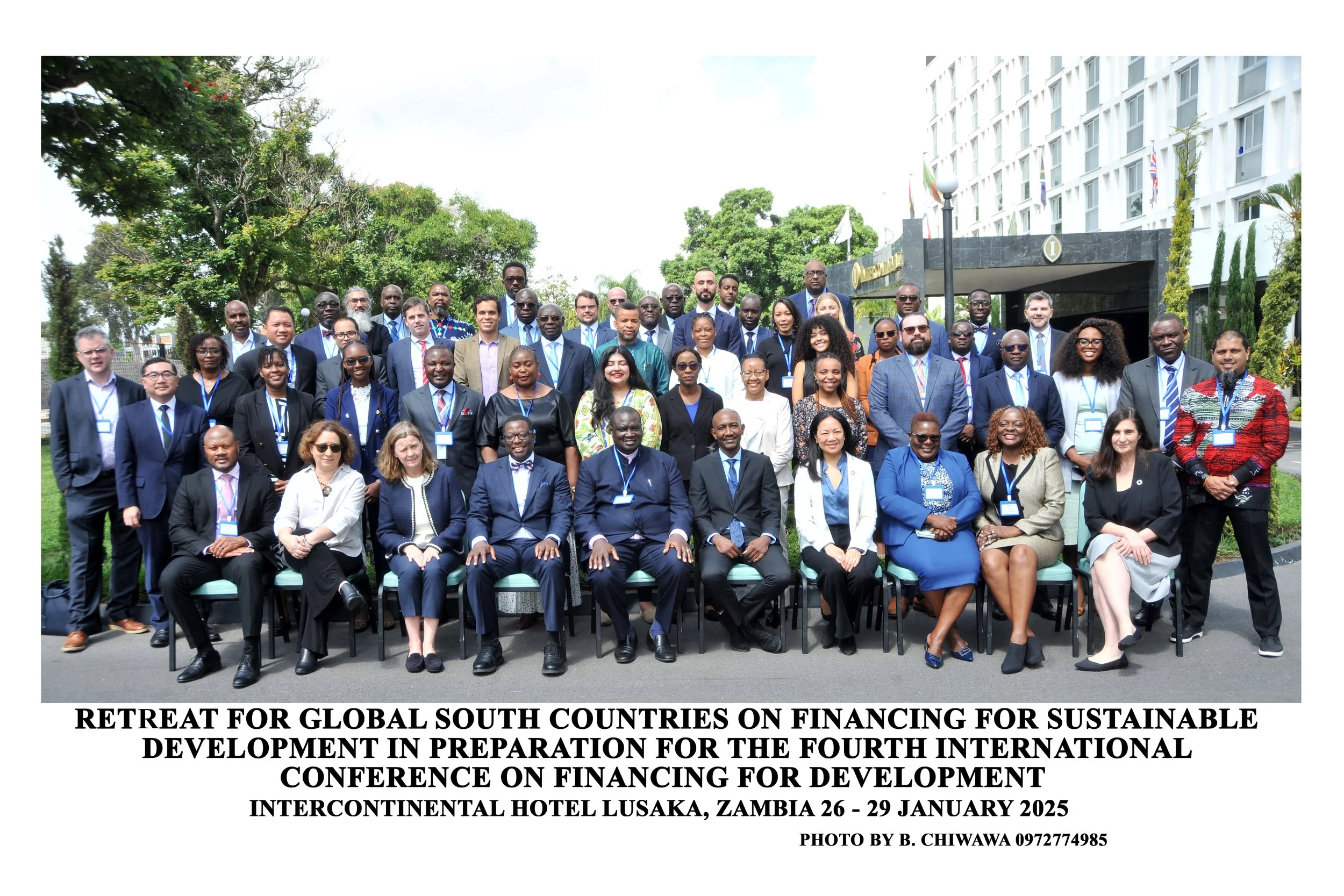
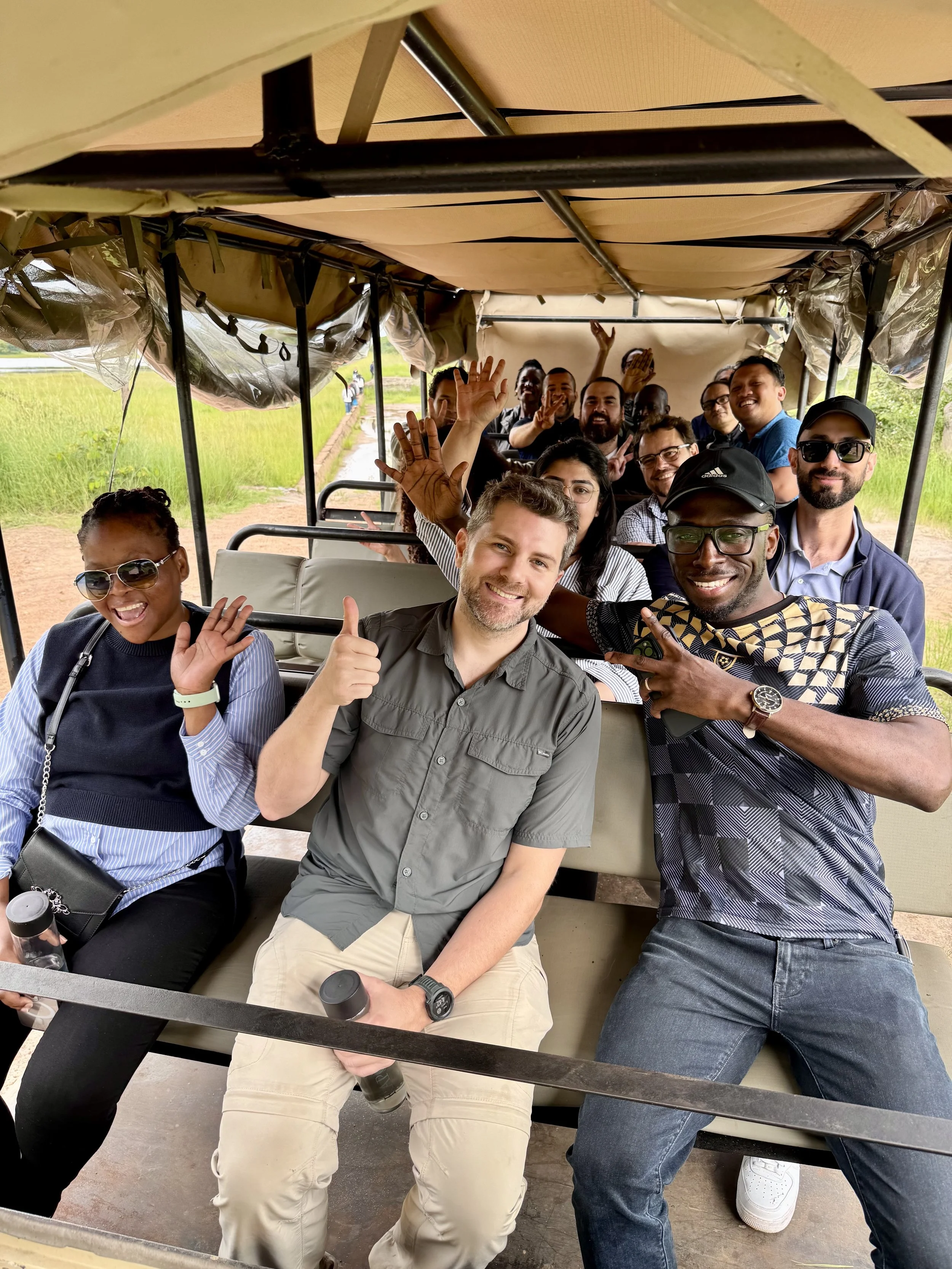
Global South Retreat on Financing for Development, Lusaka, Zambia
-
![Starling Institute conference on financing for sustainable development in Lusaka, Zambia, January 2025.]()
Global South Retreat on Financing for Development, Lusaka, Zambia
-
![A group of diverse people smiling, standing in a formal room with wood-paneled walls and portraits hanging, including a prominent horse statue in the background.]()
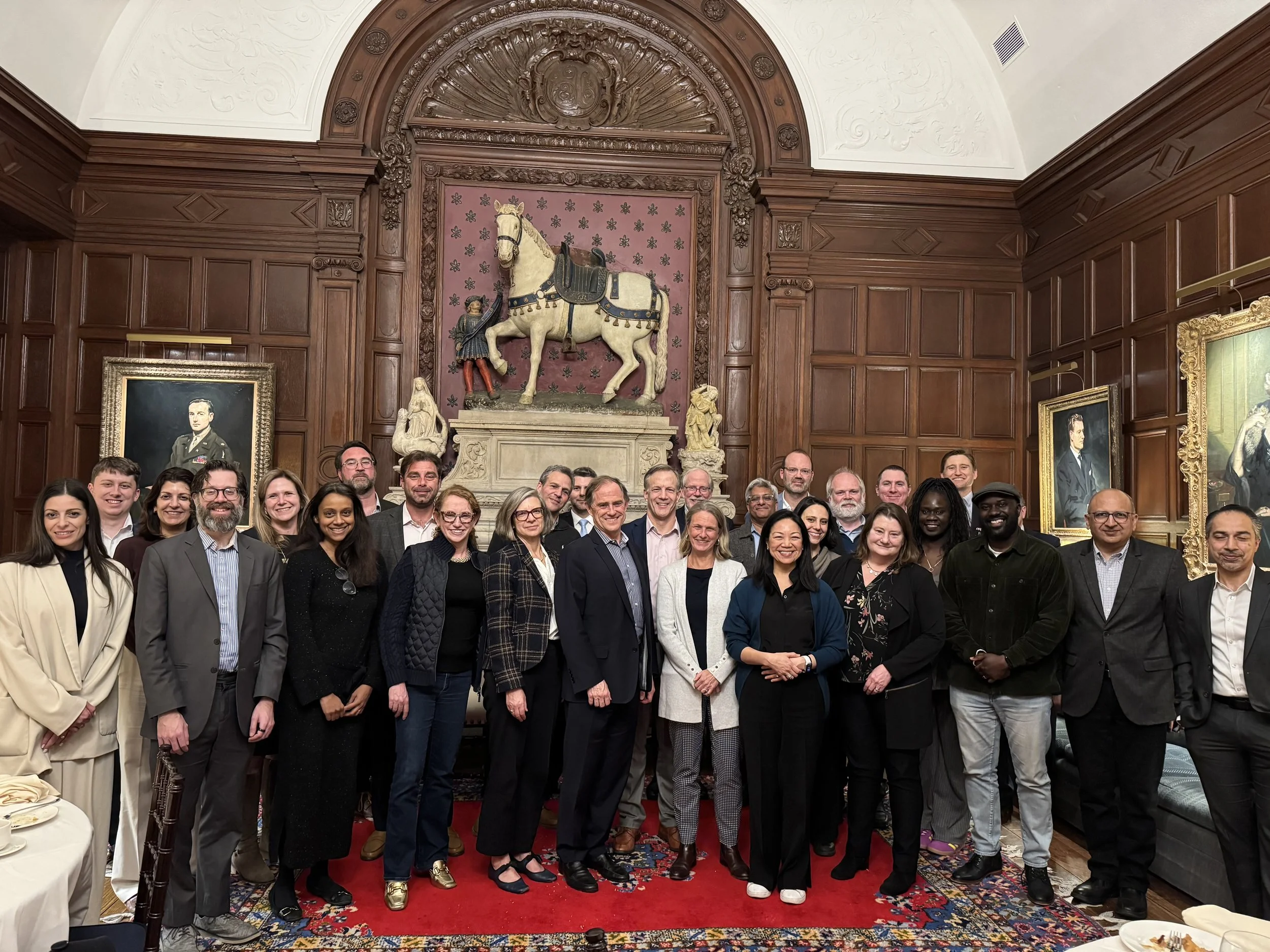
The Future of Multilateralism in an Era of Upheaval, Pocantico
-
![Two people sitting in a wood-paneled room with large portraits on the wall, carved fireplace, and antique furniture, one woman with gray hair in a navy dress and a man with glasses in a dark suit.]()
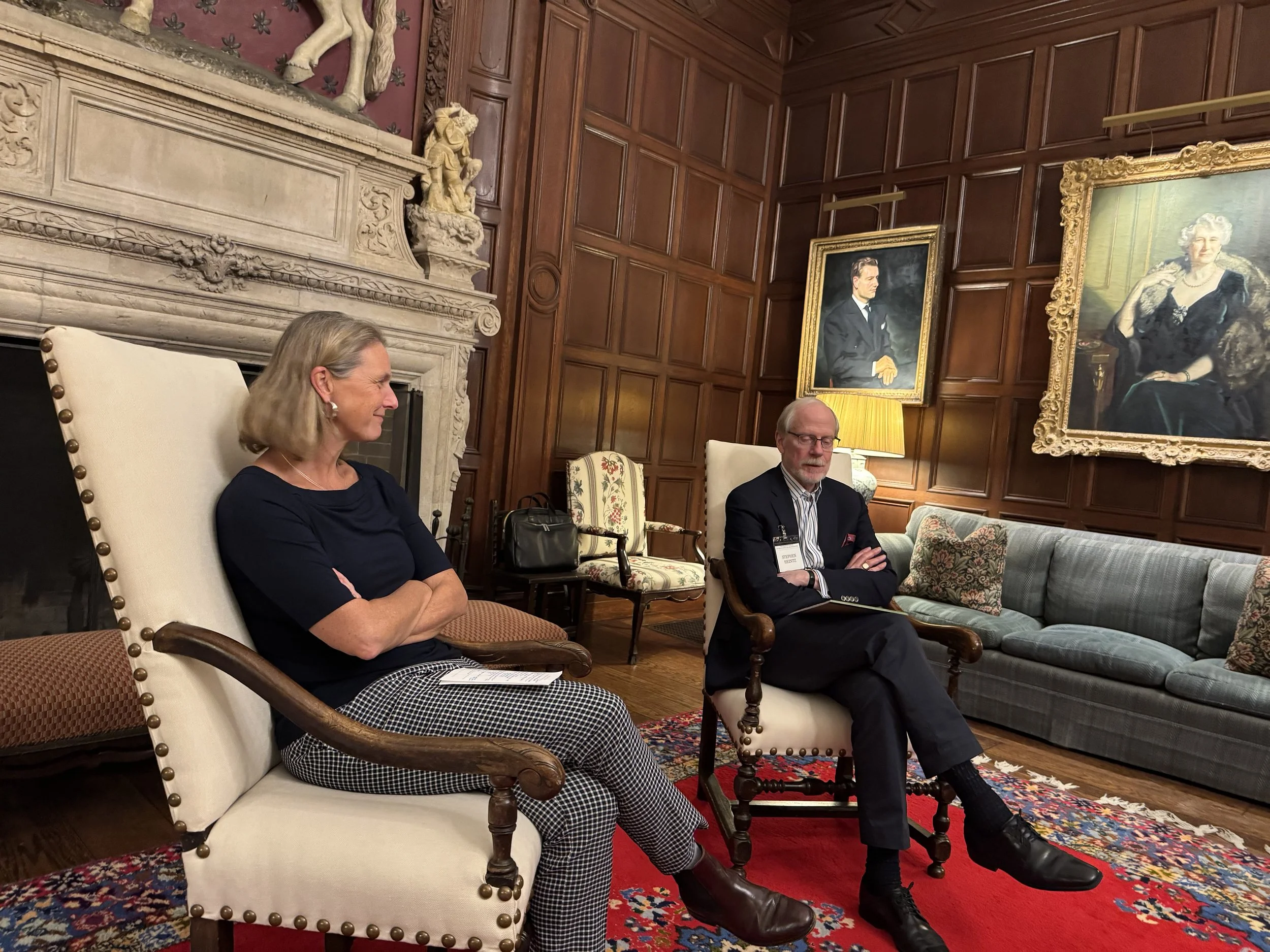
The Future of Multilateralism in an Era of Upheaval, Pocantico
-
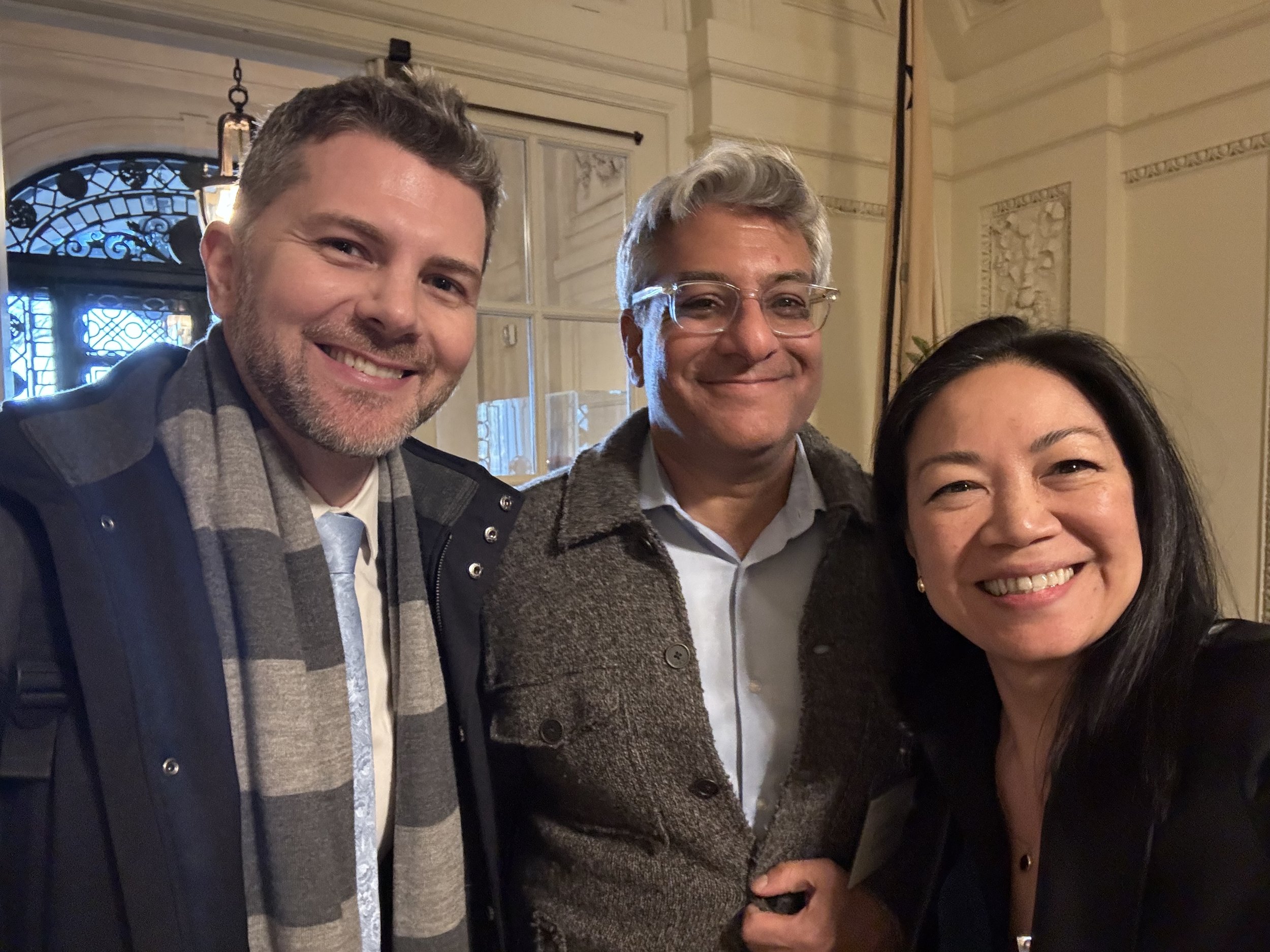
![Four people are taking a selfie together indoors, smiling at the camera. The background shows ornate decor and a window with decorative ironwork.]()
The Future of Multilateralism in an Era of Upheaval, Pocantico
-
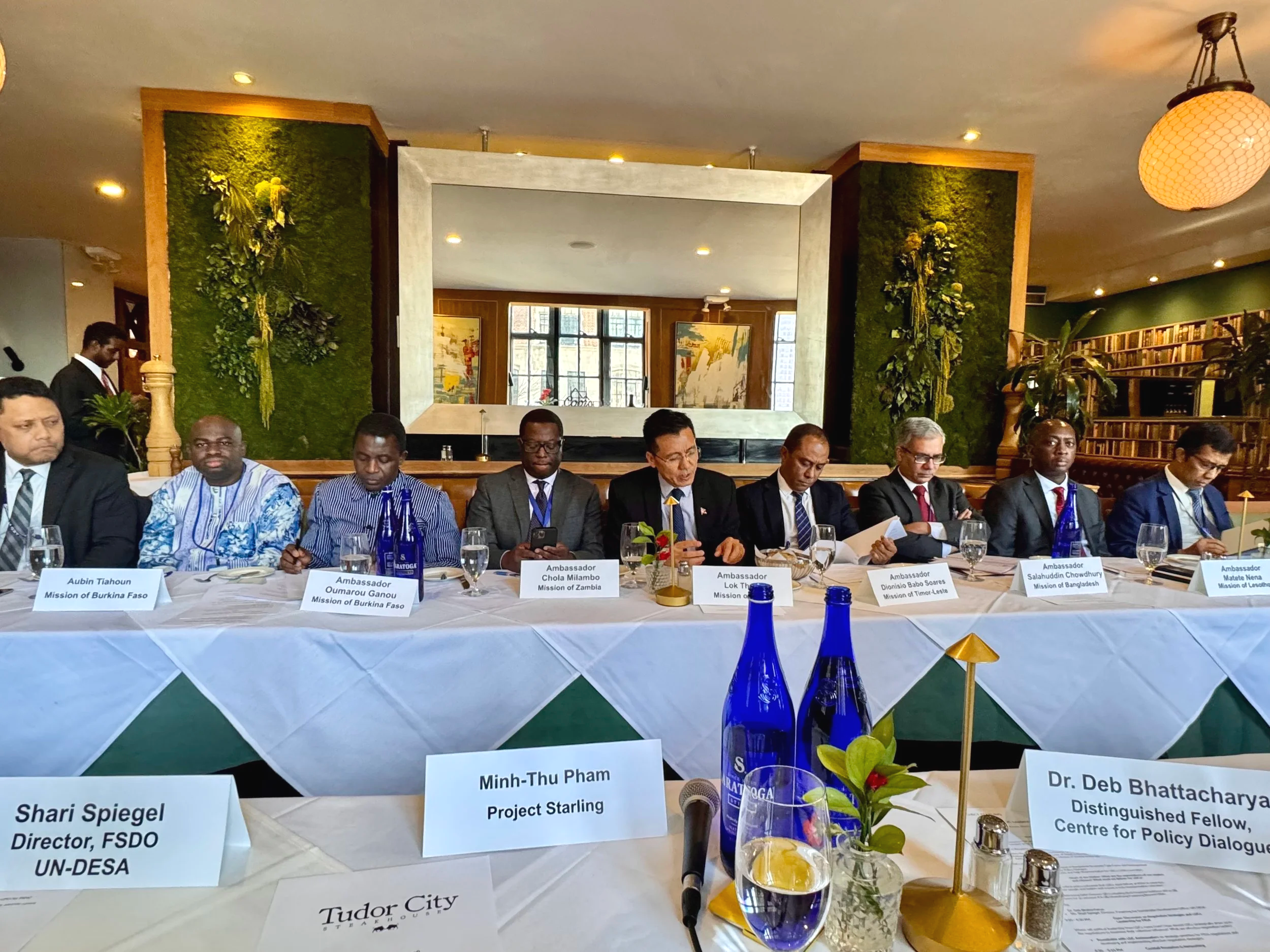
![A group of men seated at a long table with name tags, water bottles, and glasses in a room decorated with green moss wall panels and artwork, participating in a meeting or conference.]()
Least Developed Countries Leadership Luncheon, New York City
-
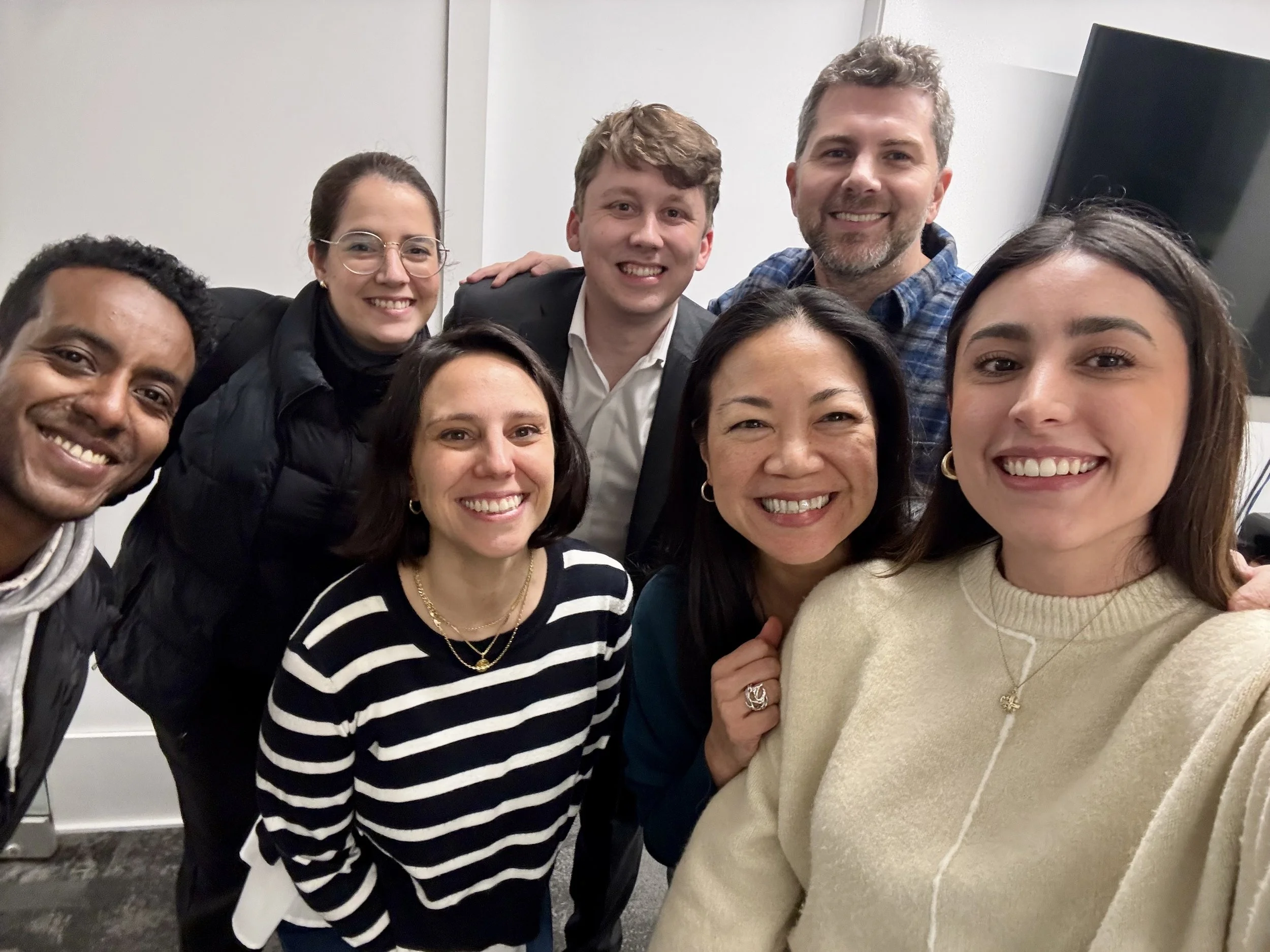
![Group of smiling diverse people taking a selfie together indoors, standing close to each other.]()
Project Starling Team, February 2025
-
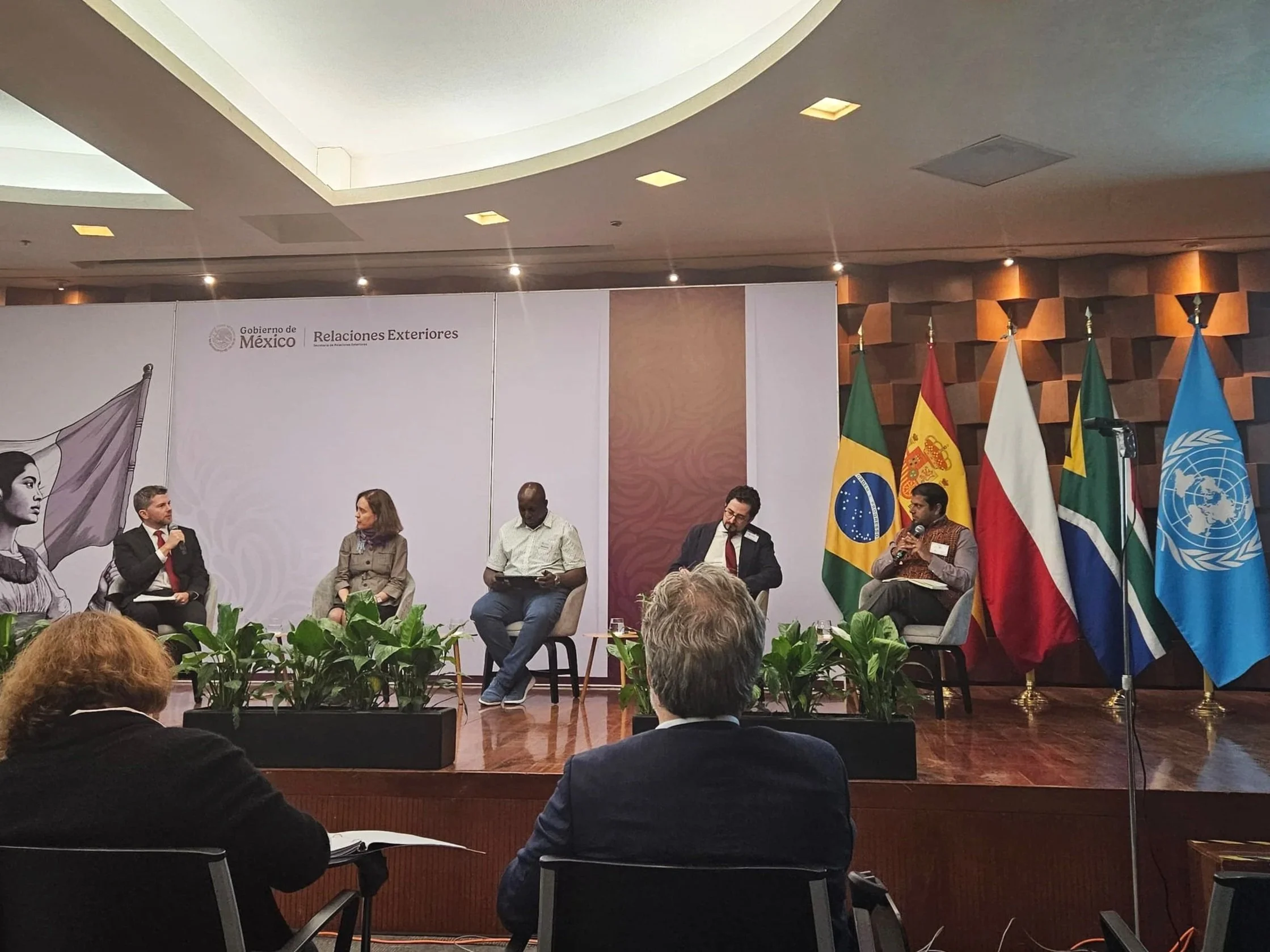
![Panel discussion at a conference with multiple speakers seated on stage, and flags of various countries displayed behind them.]()
Group of Friends of Monterrey on FfD Retreat, Mexico City
-
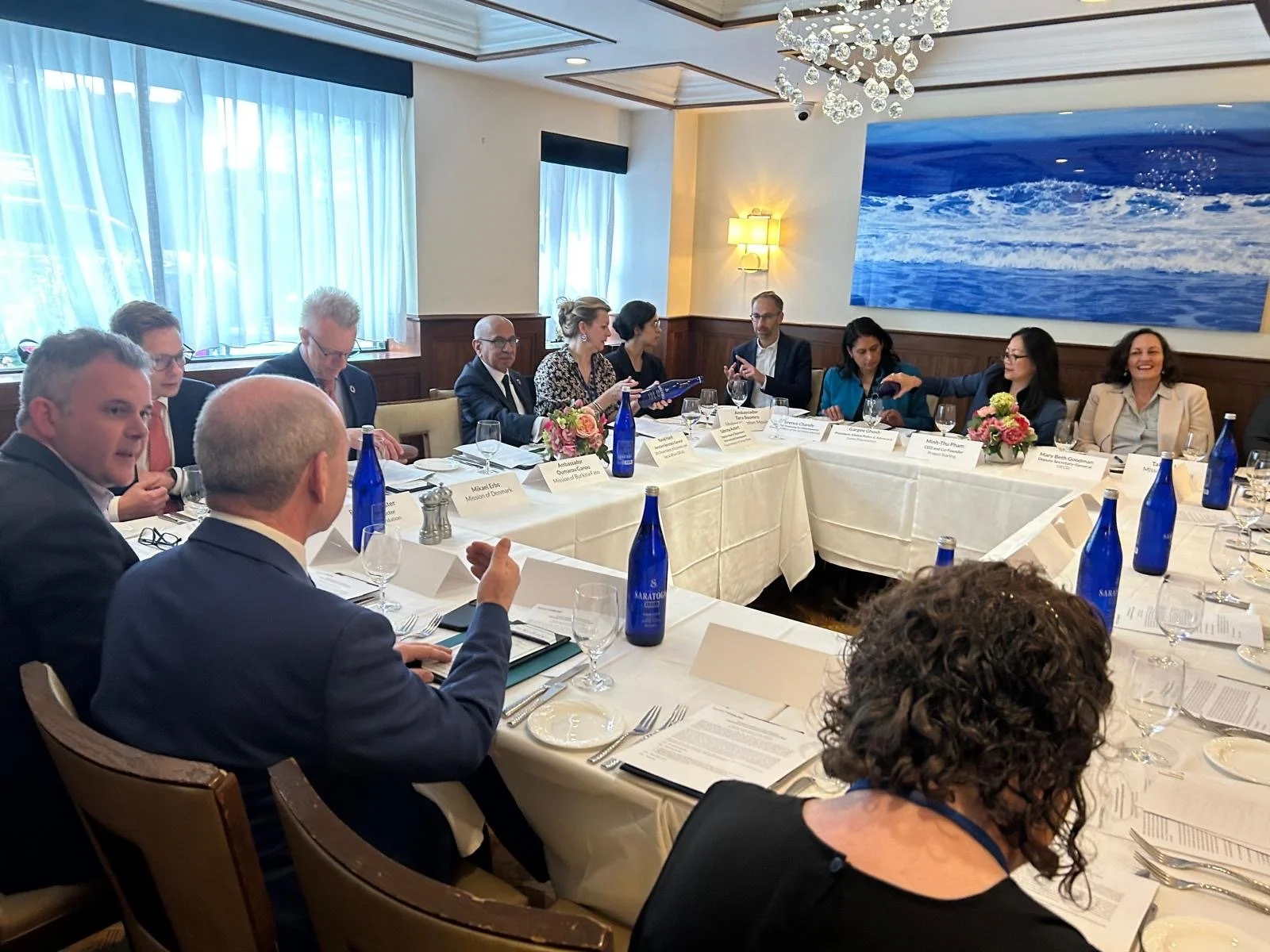
![A group of professionally dressed people sitting around a U-shaped table in a conference room, engaging in discussion during a formal meeting or event. The table is set with glassware, silverware, floral centerpieces, and blue water bottles labeled "Saratoga." Large windows with sheer curtains and a blue abstract ocean-themed painting on the wall are visible in the room.]()
Future of Development Cooperation Lunch, with Gates Foundation & OECD, NYC
-
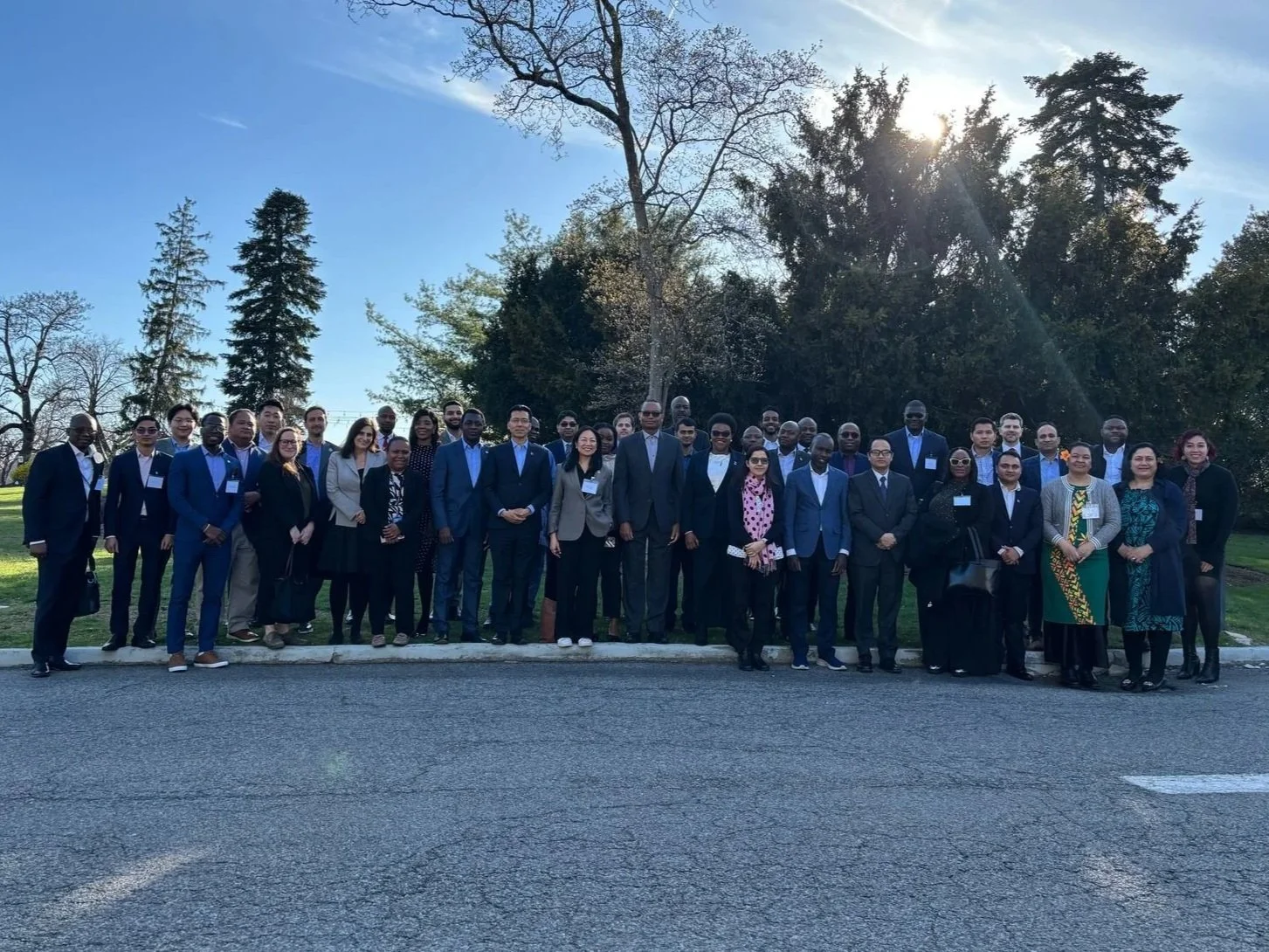
![Group of diverse people in business attire standing outdoors on a paved area with trees and sunlight in the background.]()
Strategy Retreat for Least Developed Countries with Nepal Mission to the UN
-
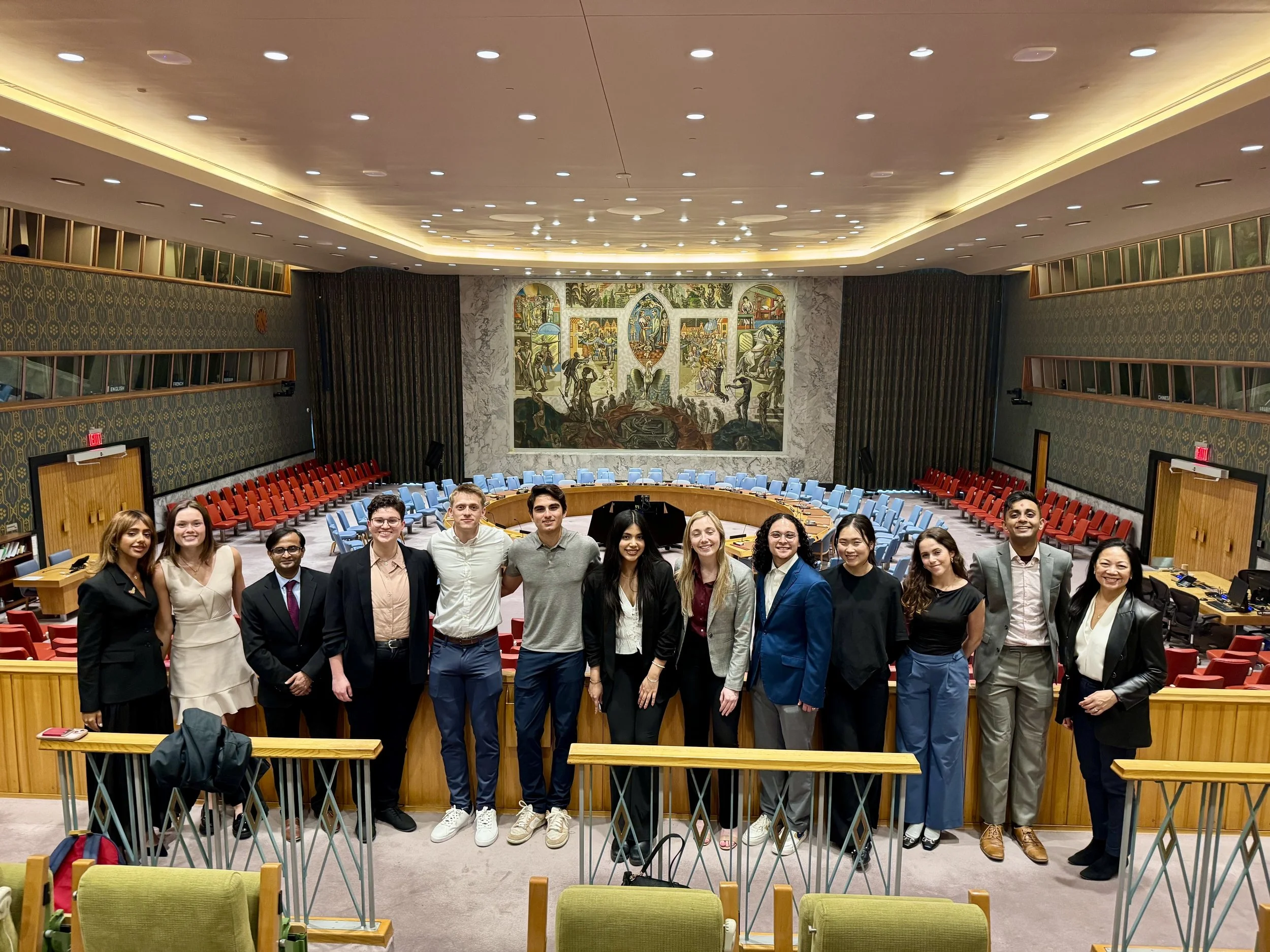
![Group of people standing together in a conference room with colorful chairs arranged in a semi-circle, a mural on the wall, and a ceiling with numerous lights.]()
Princeton SPIA Students' Task Force Report Presentation & Visit to the UN
-
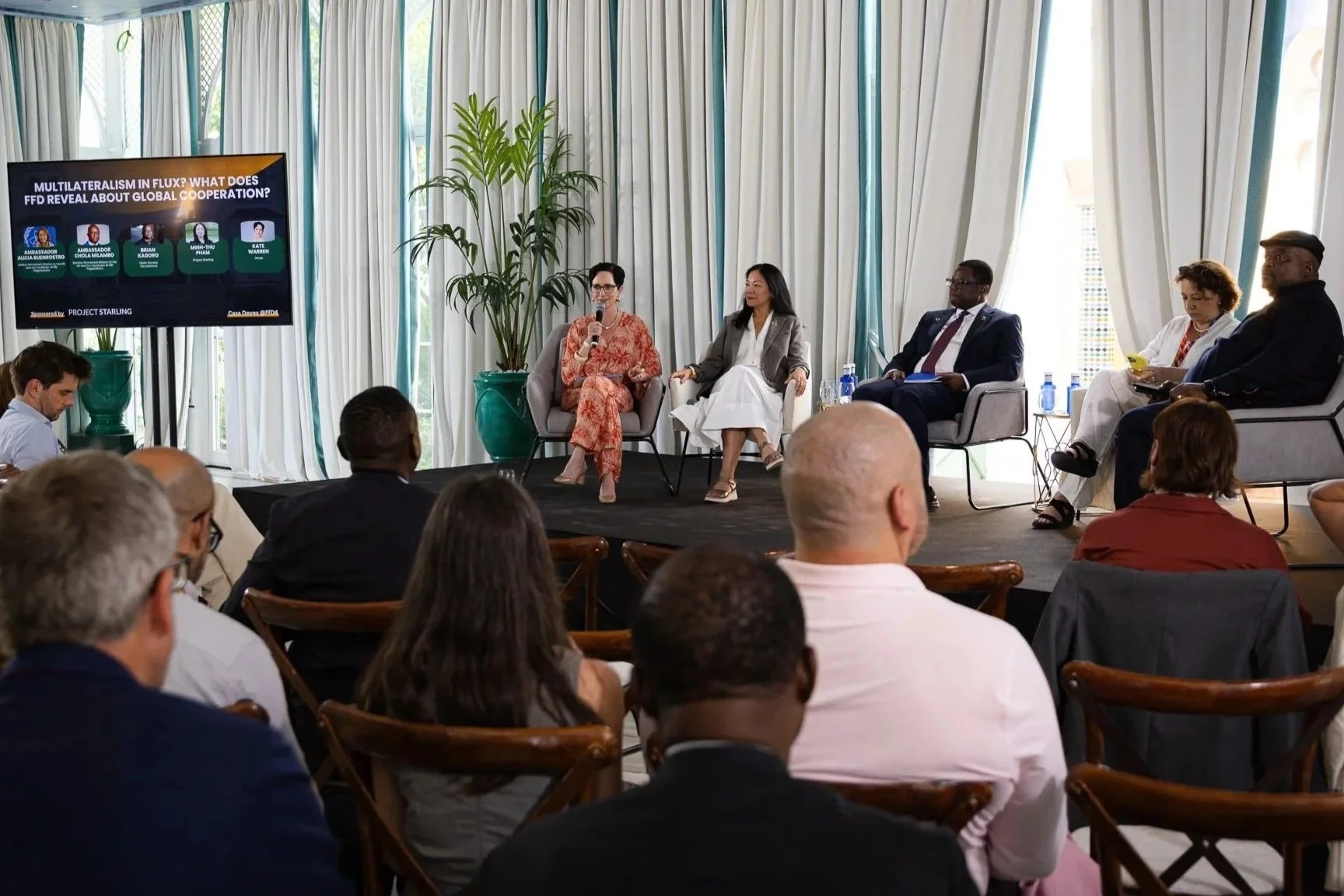
![Panel discussion during a conference with five speakers sitting on stage, and audience seated in front, featuring a large screen with a presentation about multilateralism and global cooperation.]()
Multilateralism in Flux: What does FfD Reveal About Global Cooperation? with Casa Devex, Sevilla
-
![Title slide of a panel discussion with five speakers, titled 'Multilateralism in Flux? What Does FfD Reveal About Global Cooperation?'. The speakers are Ambassador Alicia Buenrostro from Mexico, Ambassador Chola Milambo from Zambia, Brian Kagoro from Open Society Foundations, Minh-Thu Pham from Project Starling, and Raj Kumar from Devex, with their names and titles displayed below their images. The slide indicates the event is sponsored by Project Starling and Casa Devex.]()
Multilateralism in Flux: What does FfD Reveal About Global Cooperation? with Casa Devex, Sevilla
-
![People gathered outdoors on a rooftop at sunset, attending a social event or cocktail party with a city skyline in the background.]()
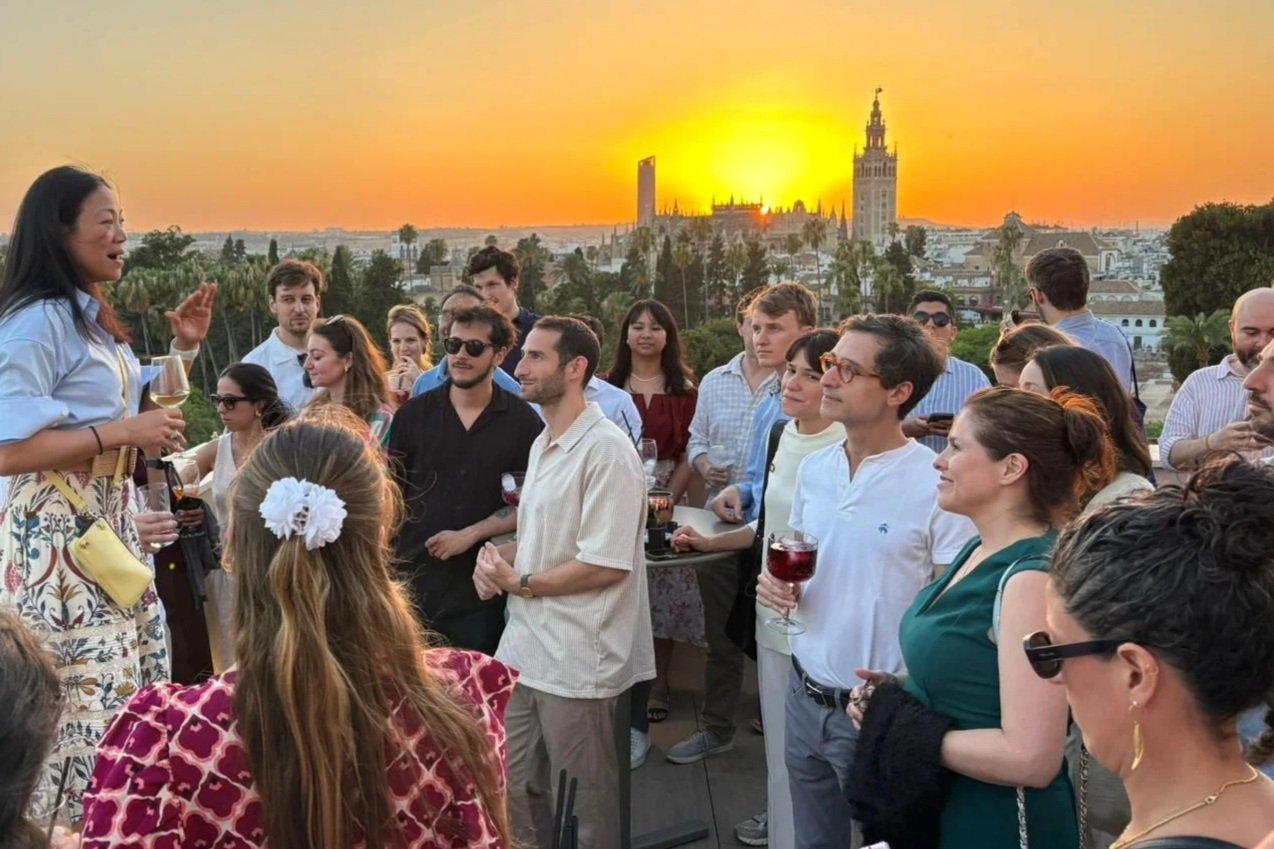
¡Salud to FfD4! A sunset toast to FfD Compromiso de Sevilla negotiators, Sevilla
-
![A diverse group of people seated around a table at a gathering or event in a lush, green indoor space with plants, colorful lights, and decorative items on the wall. A woman is standing and speaking to the group.]()
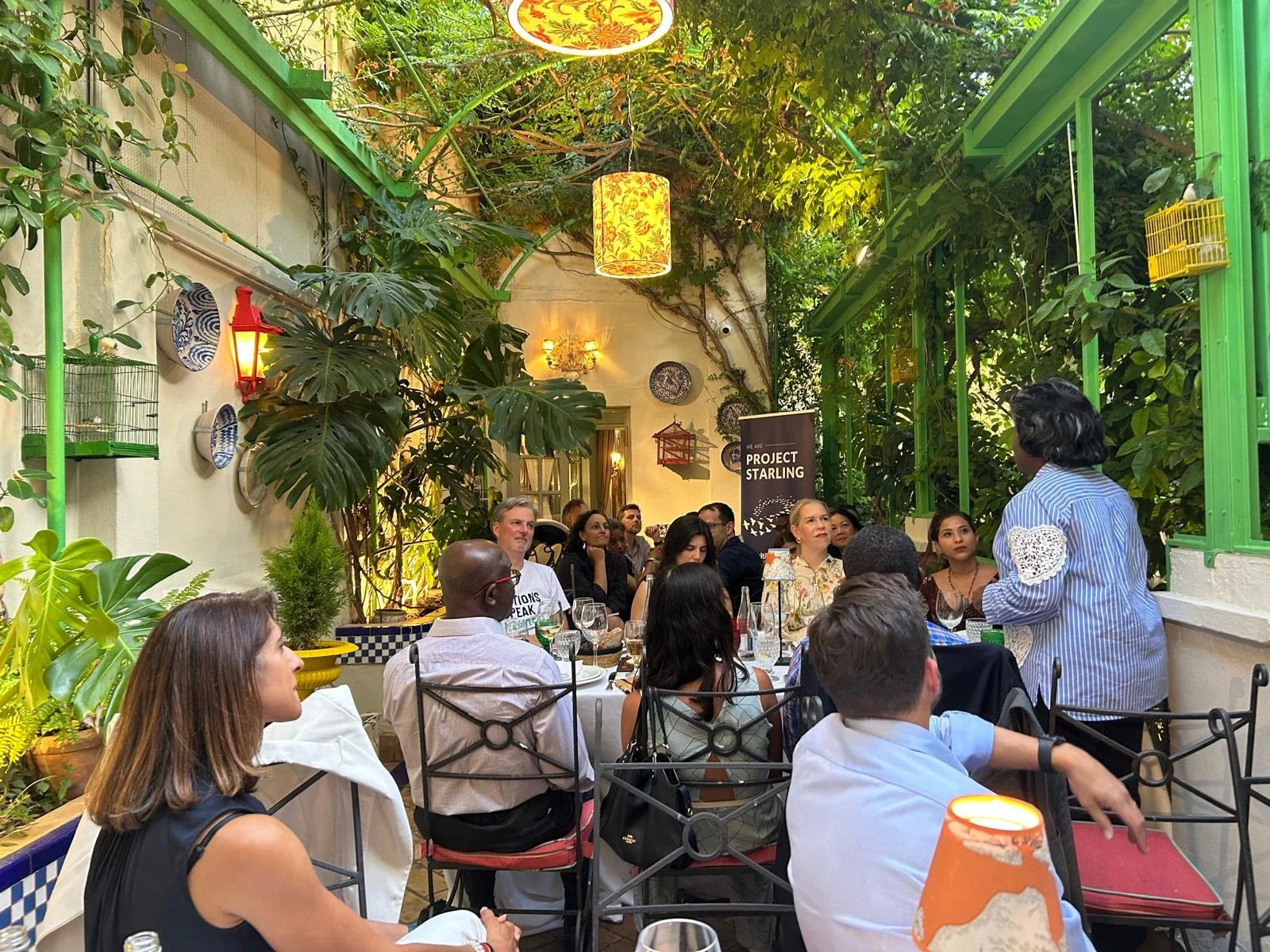
Making FfD Real, Sevilla Private Dinner with coalition partners, Sevilla
-
![Three women smiling and standing close together, with a man in the background, in a decorative restaurant or cafe with colorful tilework and framed artwork on the walls.]()
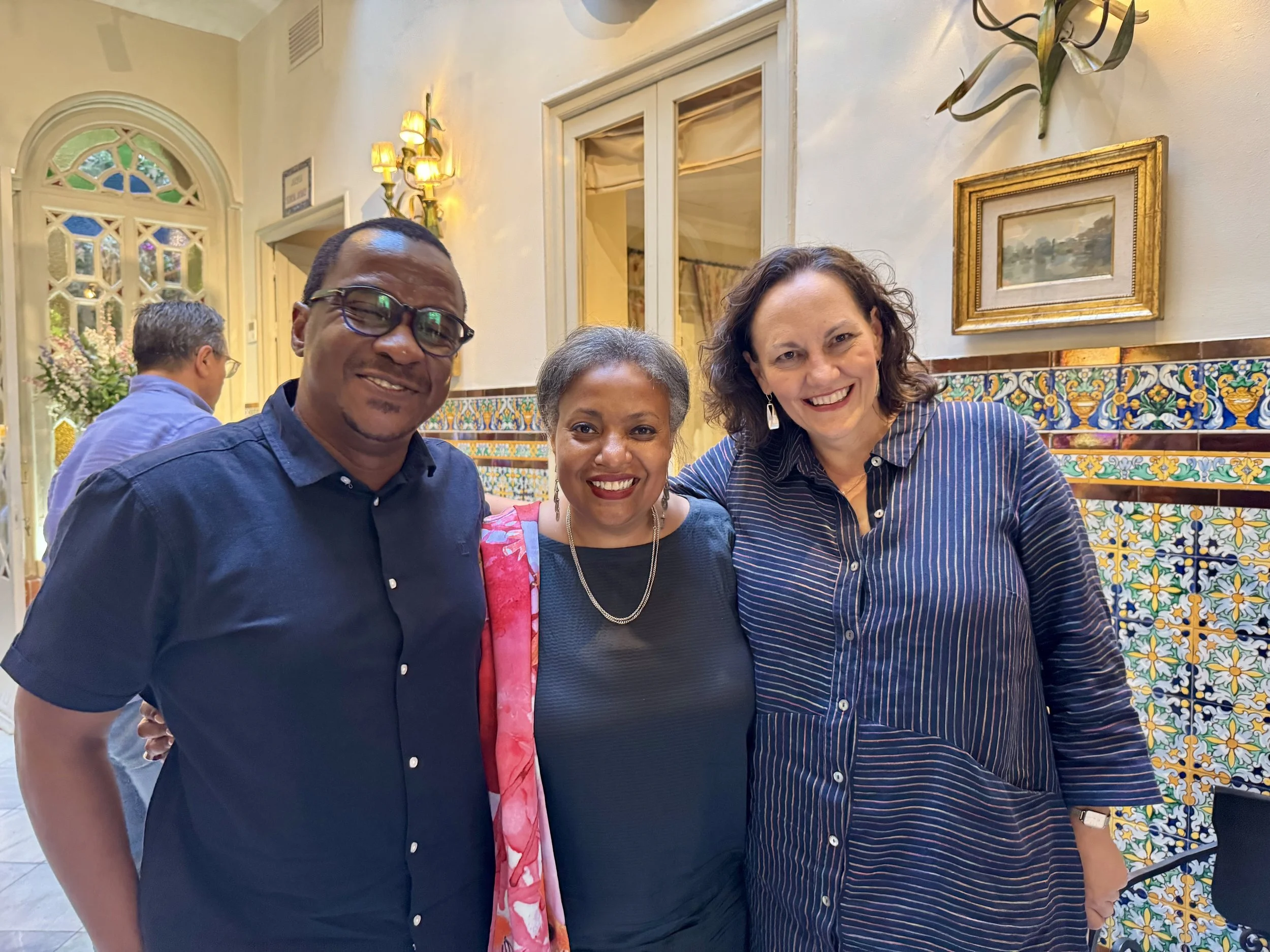
Making FfD Real, Sevilla Private Dinner with coalition partners, Sevilla
-
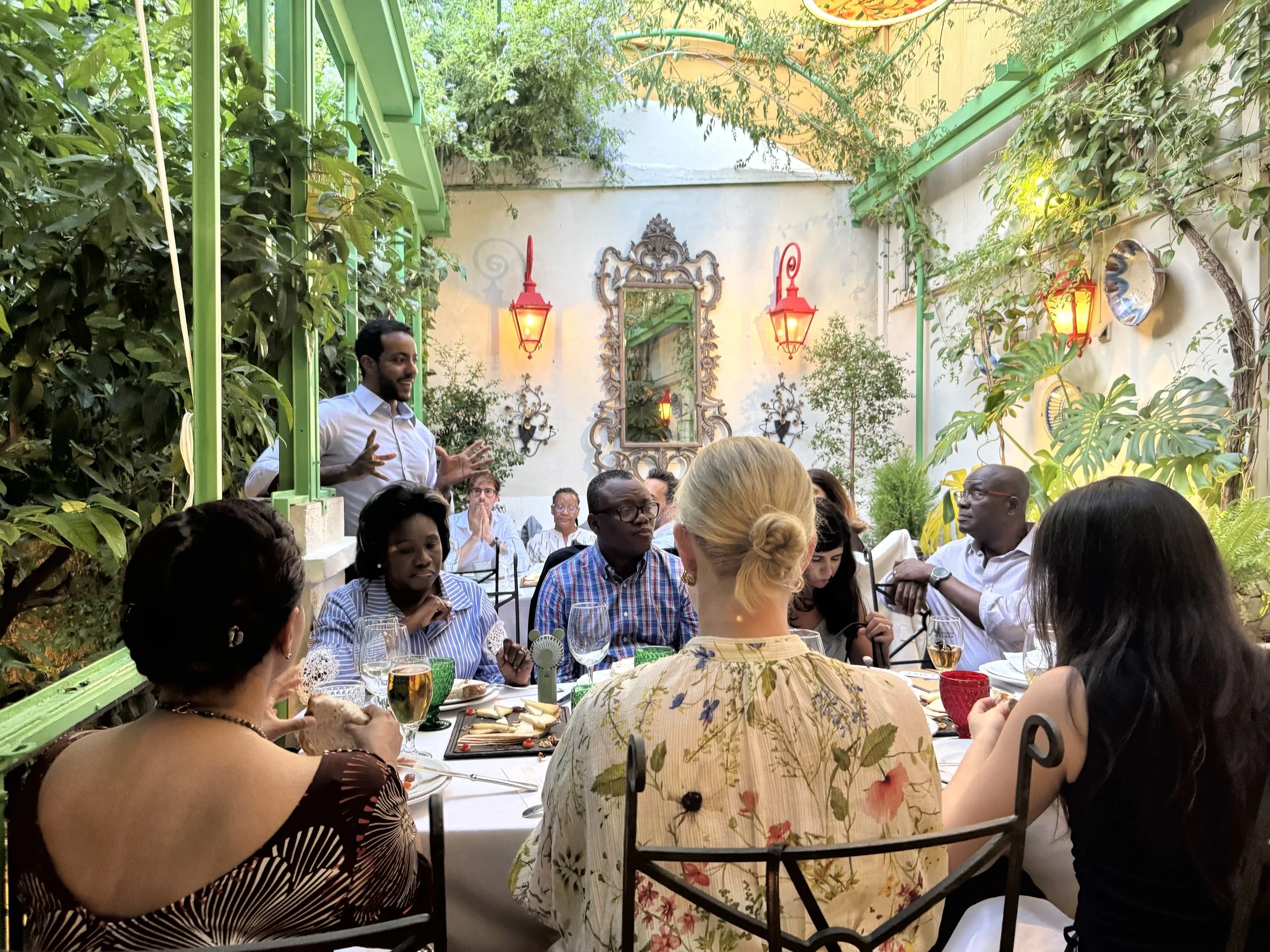
![A diverse group of people dining outdoors in a garden setting with lush green plants, decorative mirrors, and warm lighting. A man is standing and speaking to the group, which is seated around a table with food and drinks.]()
Making FfD Real, Sevilla Private Dinner with coalition partners, Sevilla
-
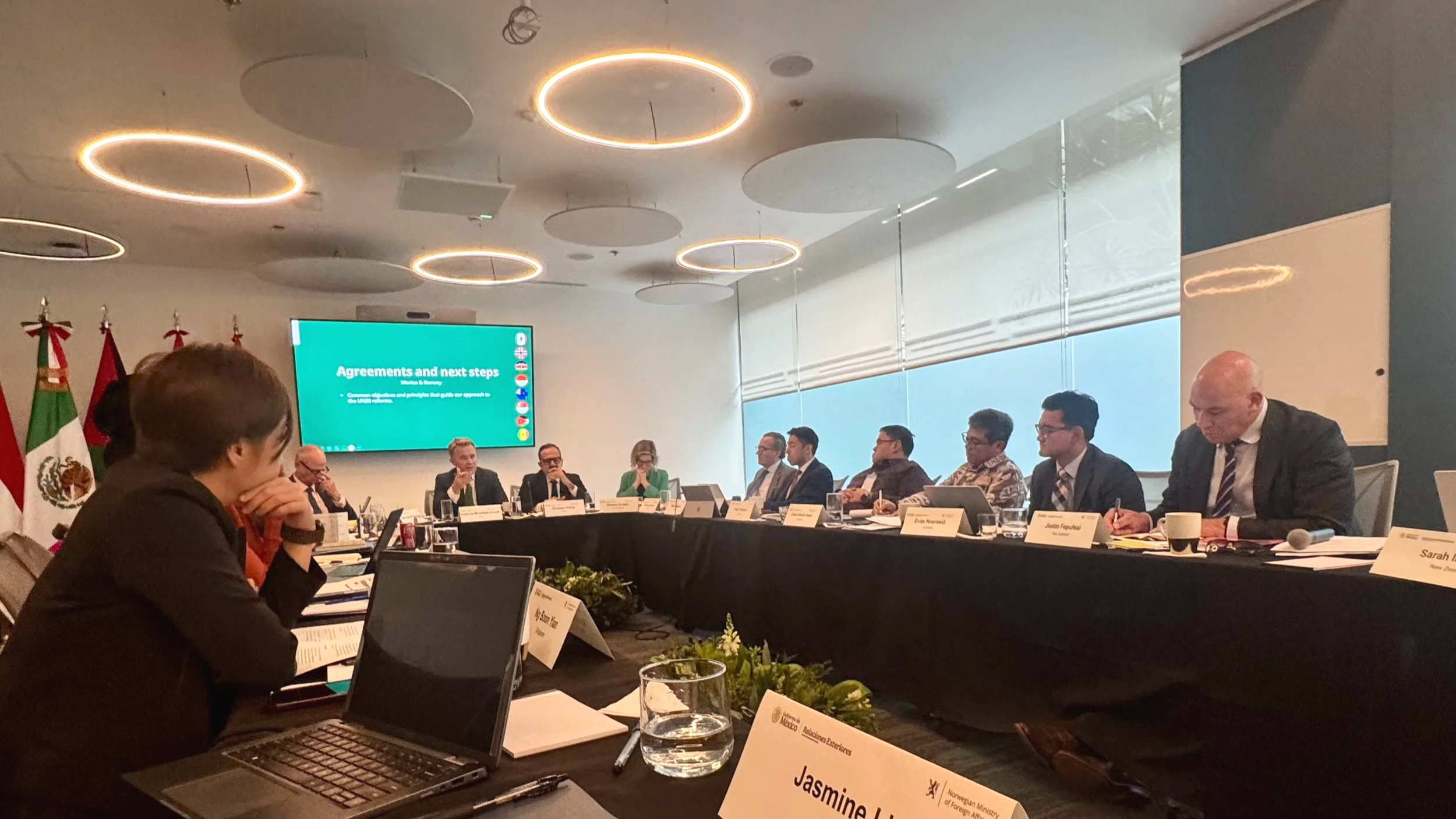
![A group of people seated around a conference table with laptops, papers, and nameplates, participating in a formal meeting or discussion in a well-lit room with a large digital screen displaying the title 'Agreements and next steps' in the background.]()
UN80 Global Retreat hosted by Mexico & Norway, Mexico City
-
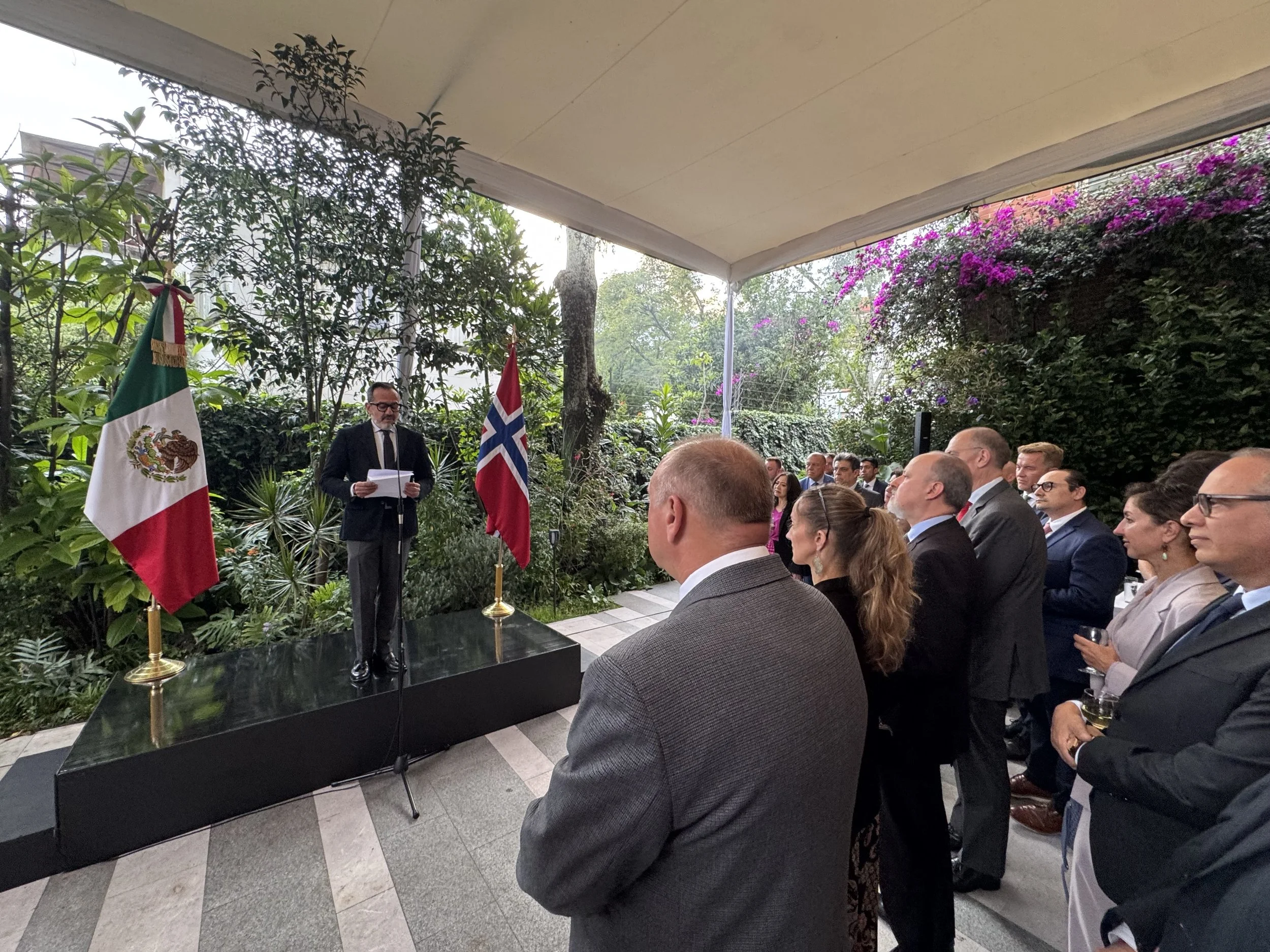
![A man in a black suit and tie is speaking at a podium with a microphone, flanked by flags of Mexico and Norway, in an outdoor garden setting during a formal event attended by a seated audience of men and women in business attire.]()
UN80 Global Retreat hosted by Mexico & Norway, Mexico City
-
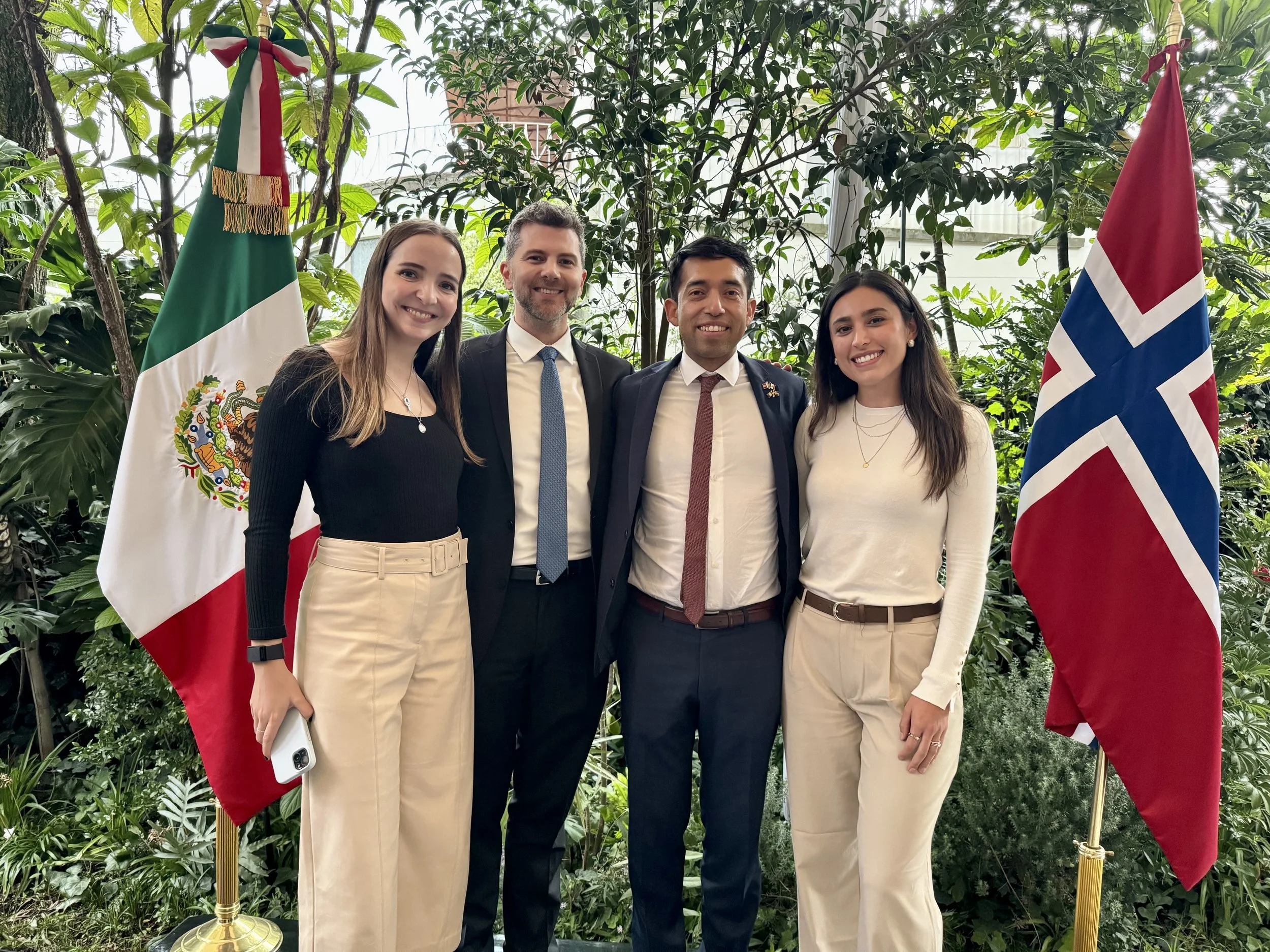
![Four people standing together in front of green plants, flanked by two flags, one of Mexico on the left and one of Norway on the right, indoors.]()
UN80 Global Retreat hosted by Mexico & Norway, Mexico City
-
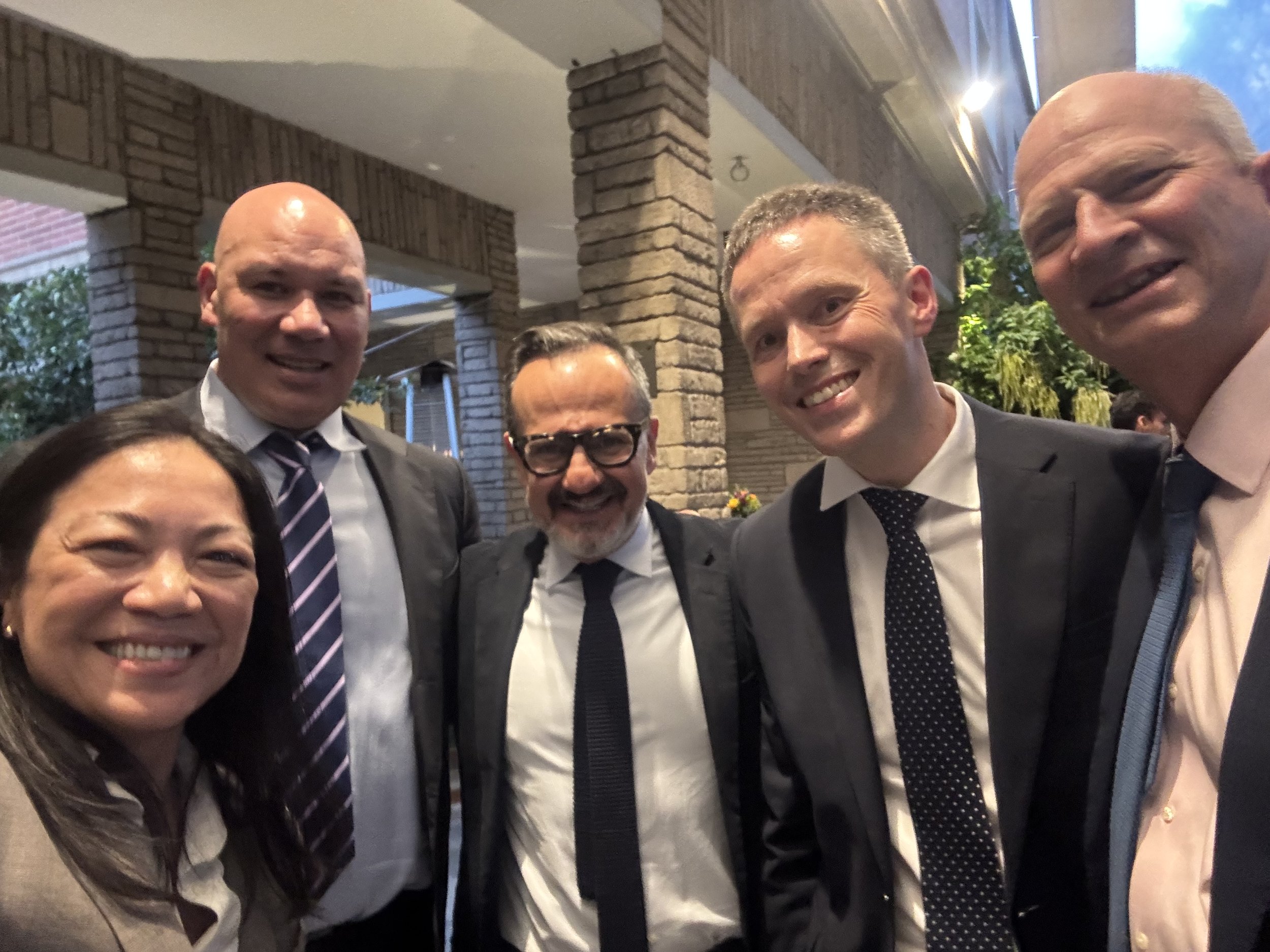
![Group of six professionally dressed people posing for a photo at a social gathering inside a brick-lined building with some greenery outside.]()
UN80 Global Retreat hosted by Mexico & Norway, Mexico City
-
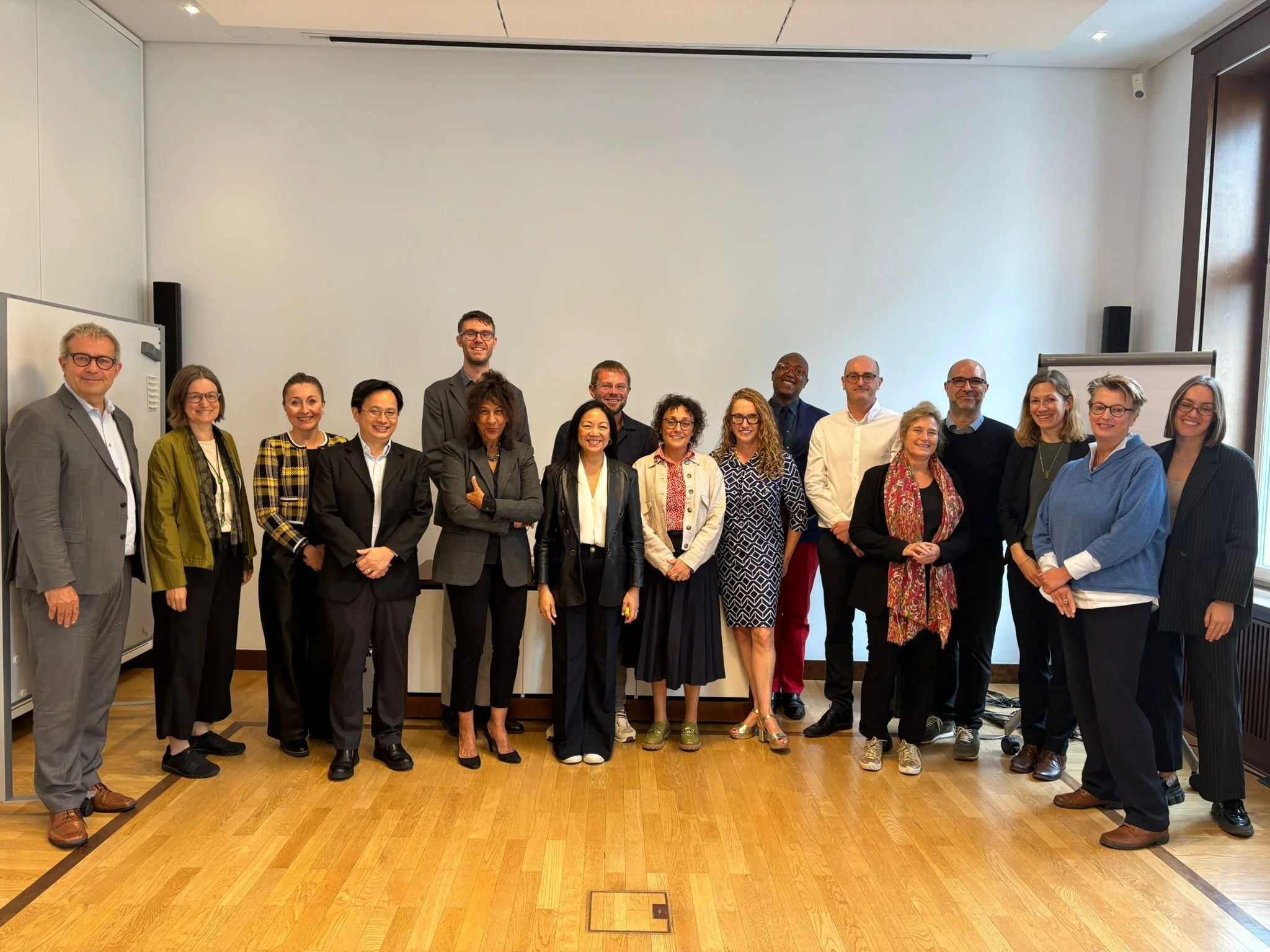
![Group of diverse professionals posing for a photo in a conference room.]()
Workshop on the Future of Multilateralism, with IDOS & Robert Bosch Stiftung, Berlin
-
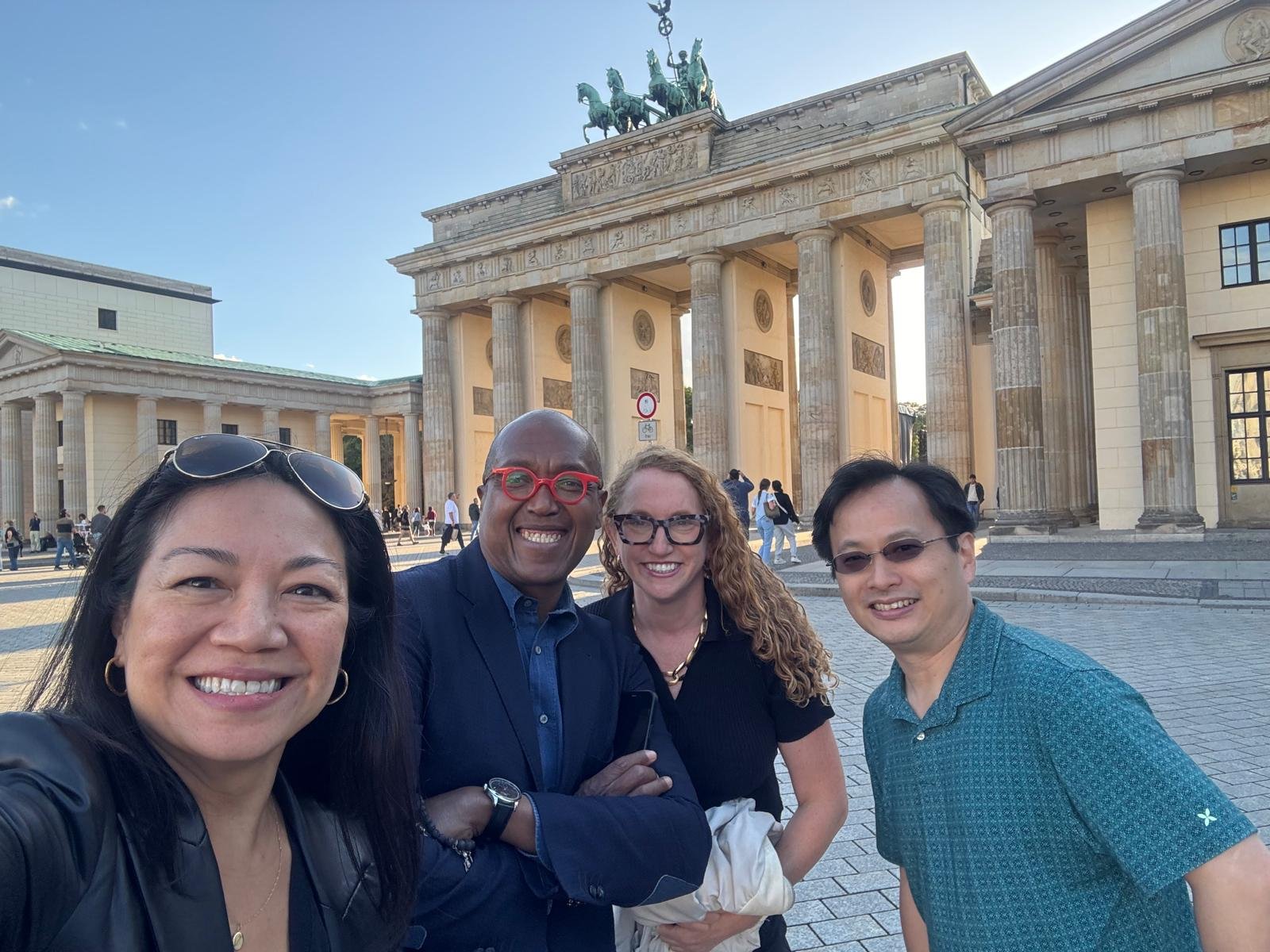
![Group of four diverse people smiling for a photo in front of the Brandenburg Gate in Berlin, Germany, during daytime.]()
Workshop on the Future of Multilateralism, with IDOS & Robert Bosch Stiftung, Berlin
-
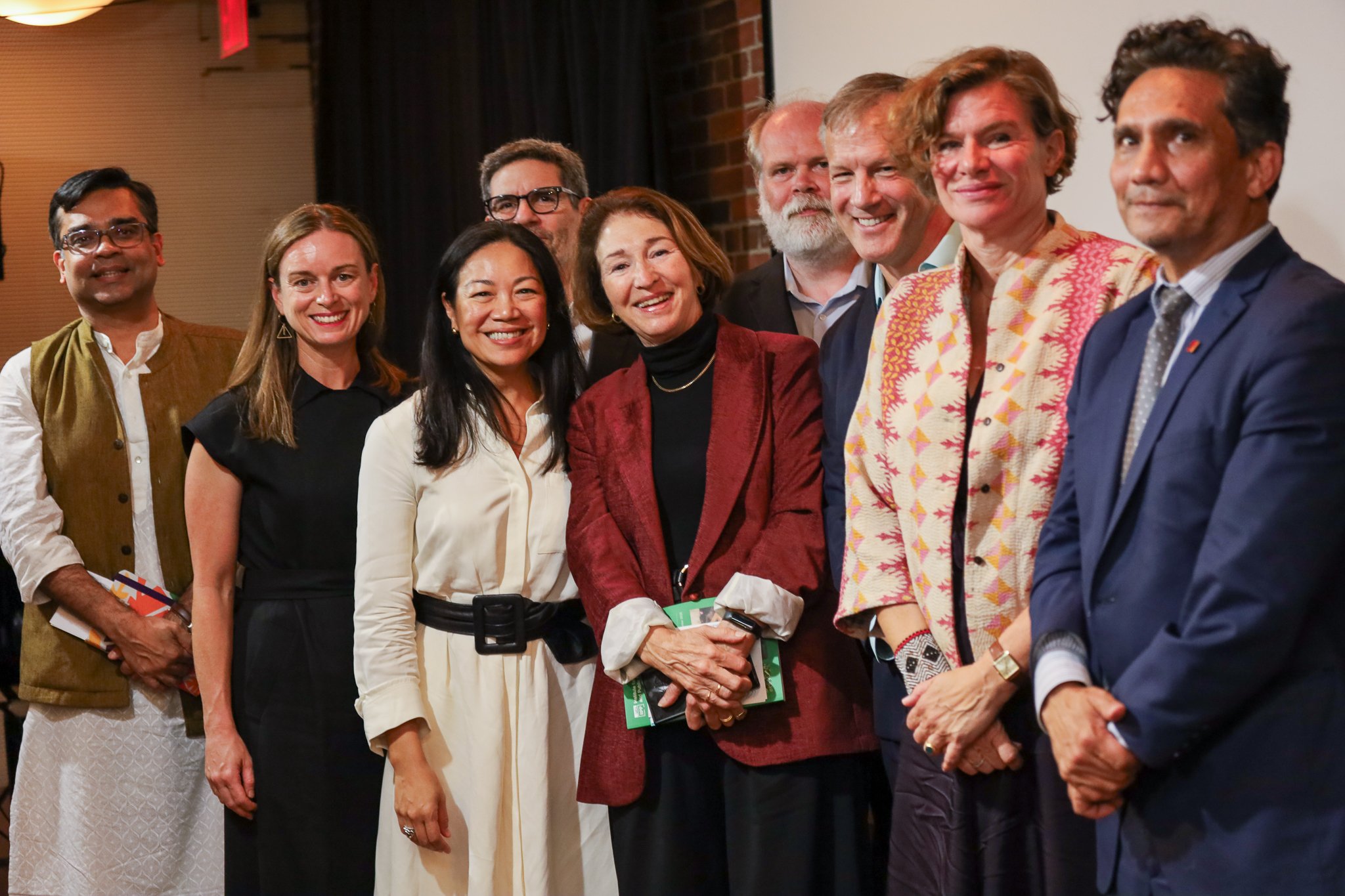
![A group of people standing together indoors, smiling at the camera, with a brick wall and a screen in the background.]()
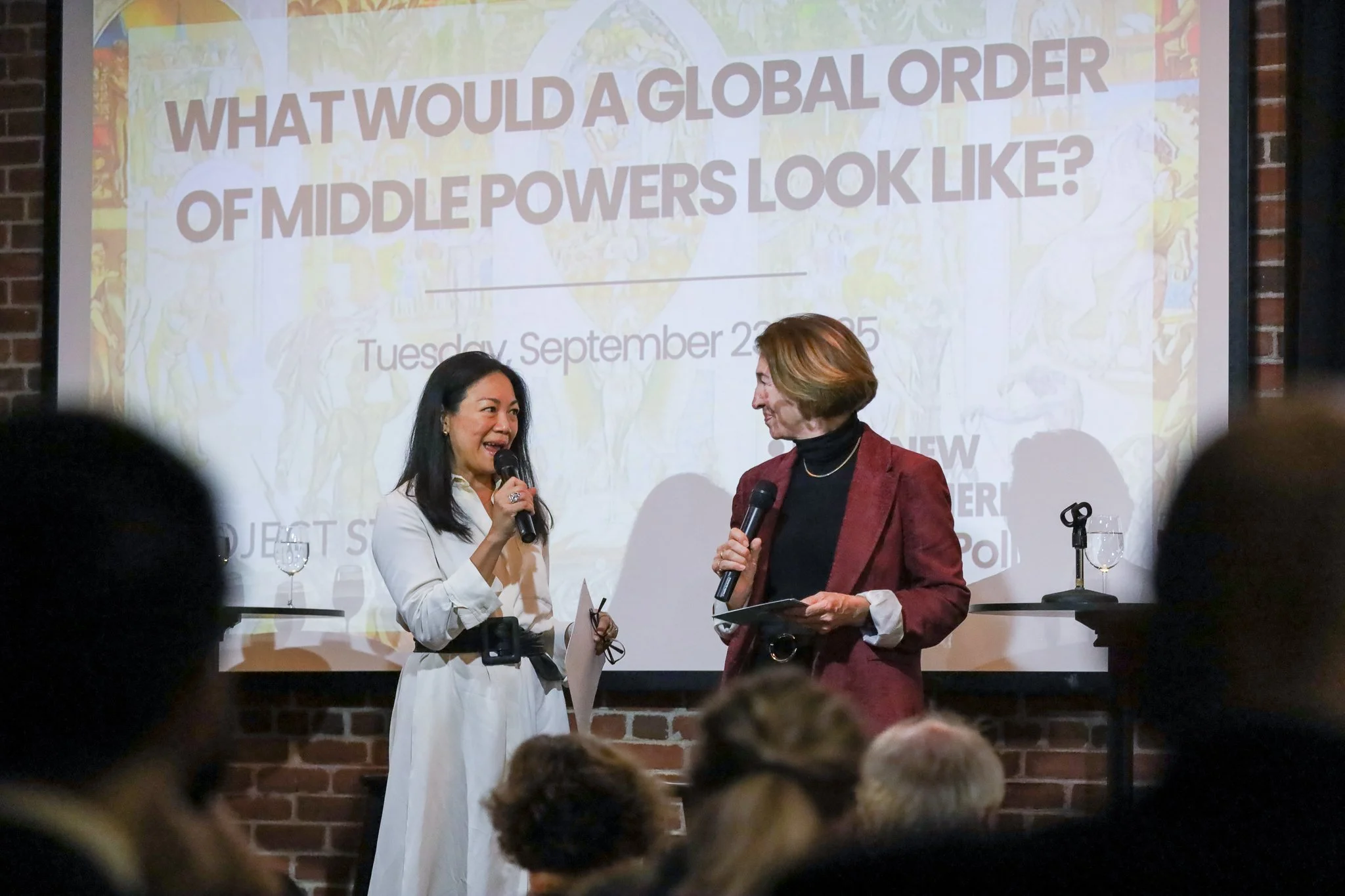
What Would a Global Order of Middle Powers Look Like? UNGA Event
-
![Two women are speaking on stage in front of a large screen displaying the question, "What would a global order of middle powers look like?" The woman on the left is holding a microphone and appears to be speaking, while the woman on the right is holding a paper or notebook. The event is happening indoors with a brick wall background, and there are audience members visible in the foreground.]()
What Would a Global Order of Middle Powers Look Like? UNGA Event
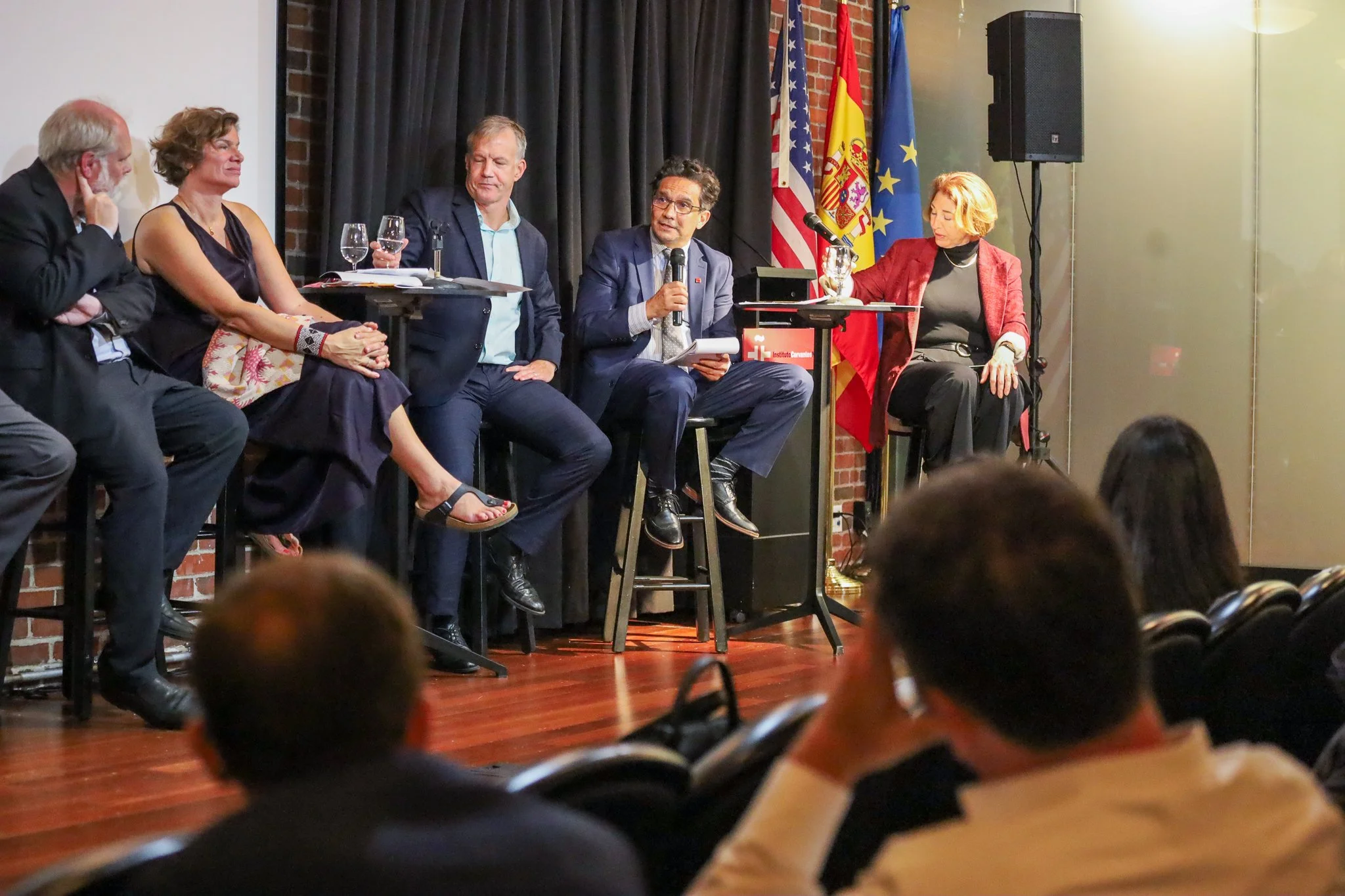
-
![Panel discussion with five individuals seated on stage, one speaking into a microphone, with flags in the background.]()
What Would a Global Order of Middle Powers Look Like? UNGA Event
-
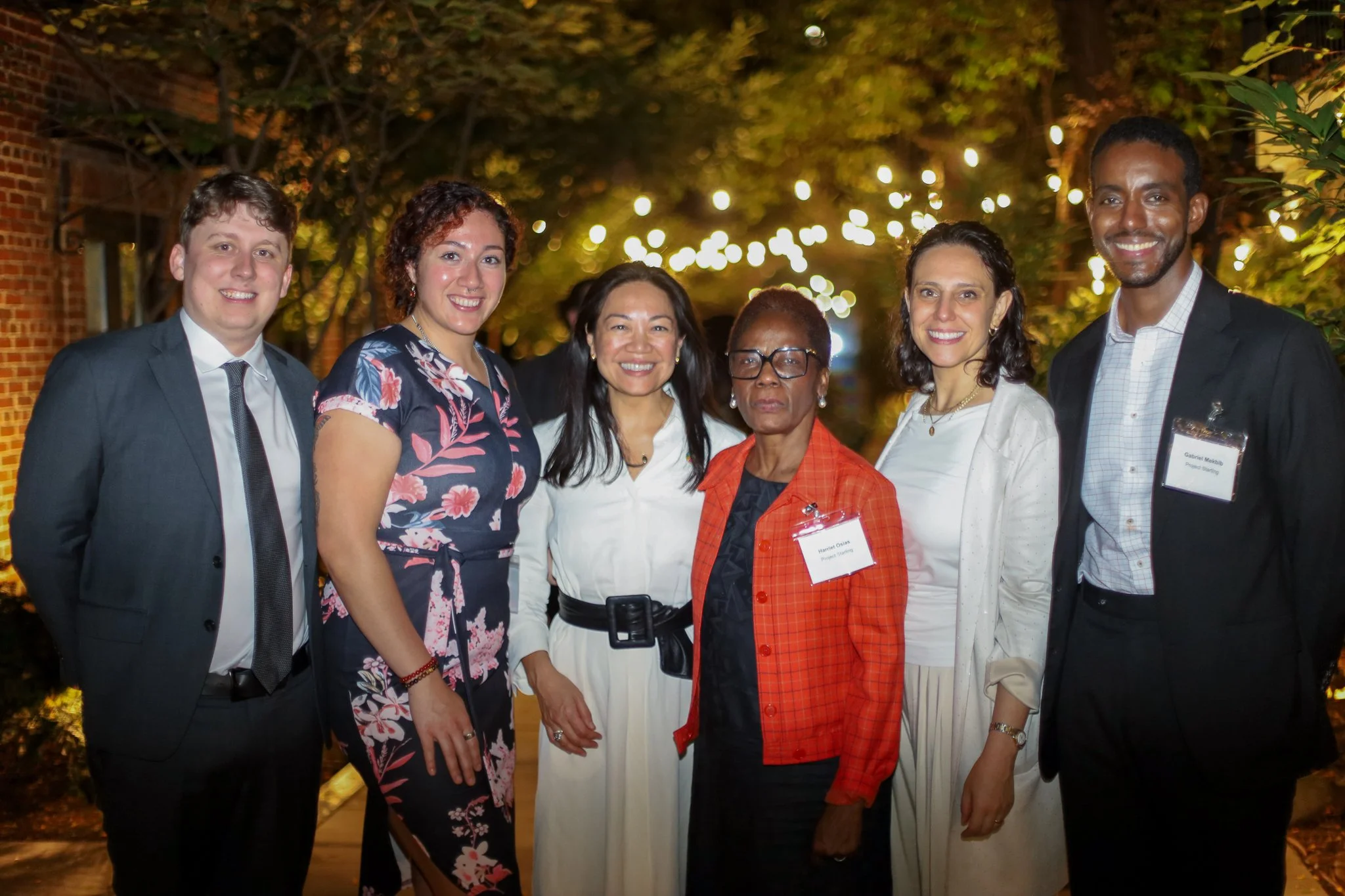
![Group of six diverse people smiling at an outdoor evening event, standing closely together with trees and string lights in the background.]()
Team behind Starling's UNGA 2025 Activities
-
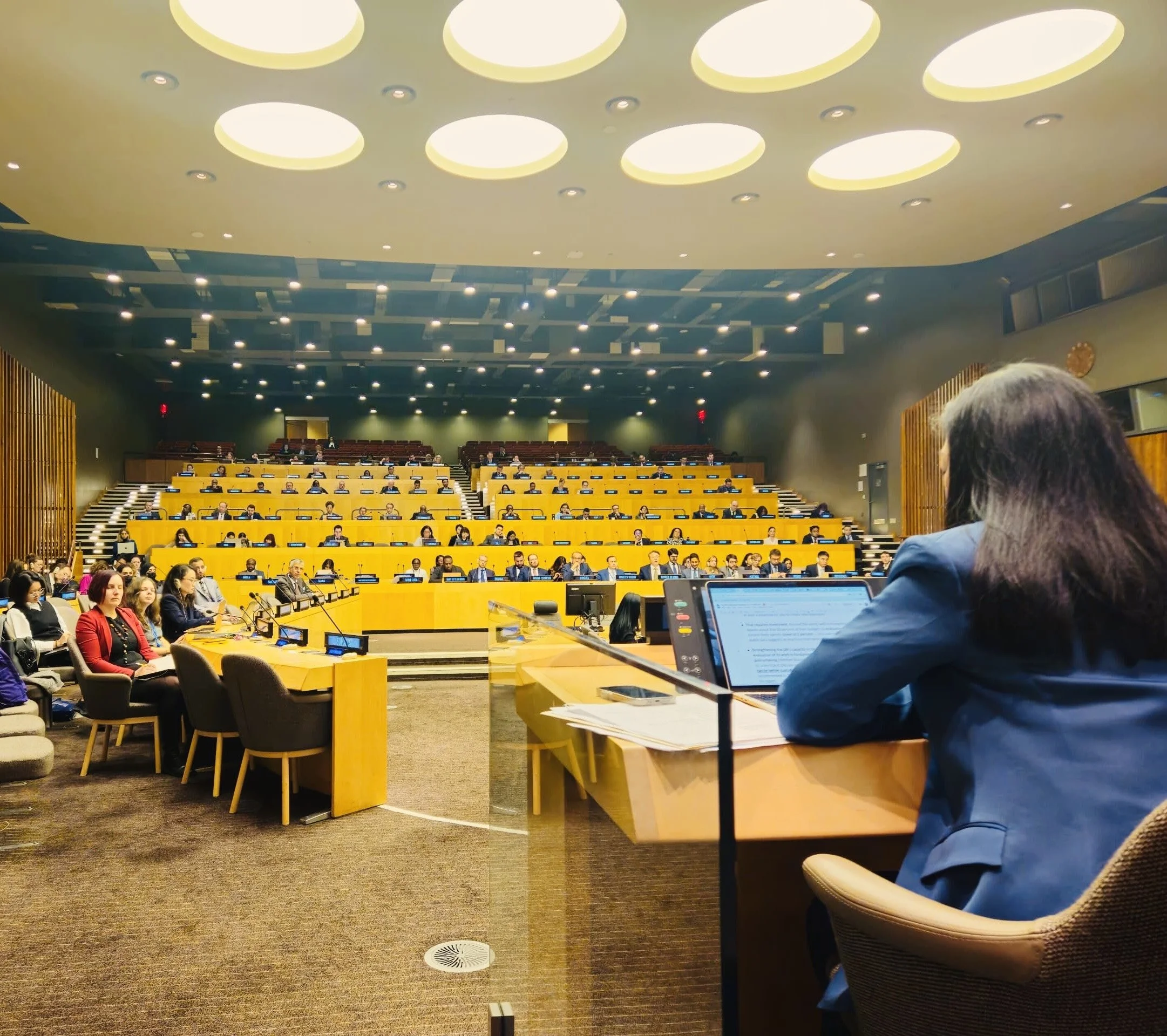
![View of a large conference room with tiered seating, yellow desks, and people seated at desks, facing the front. The ceiling has large circular lights, and a few people are visible in the foreground.]()
Briefing the UN80 Working Group on Mandate Implementation
-
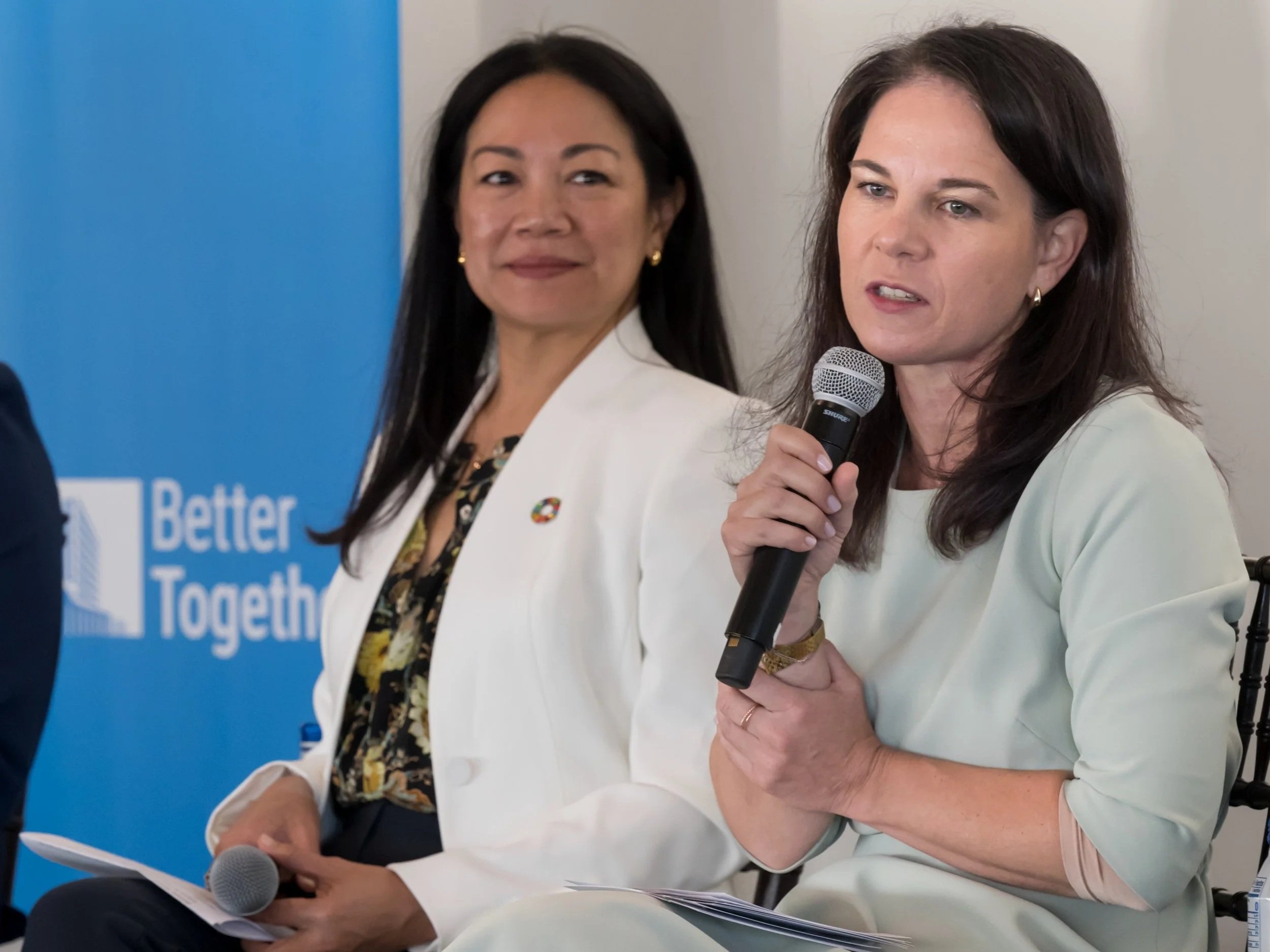
![Two women engaged in a discussion, with one woman speaking into a microphone and the other woman looking on. The woman speaking has long brown hair and is wearing a white blazer, while the other woman has long black hair and is wearing a white outfit with a floral blouse underneath. They are seated in front of a blue backdrop with the words 'Better Together' partially visible.]()
UN Charter Day 80th Anniversary, hosted by Annalena Baerbock, President of the UN General Assembly
-
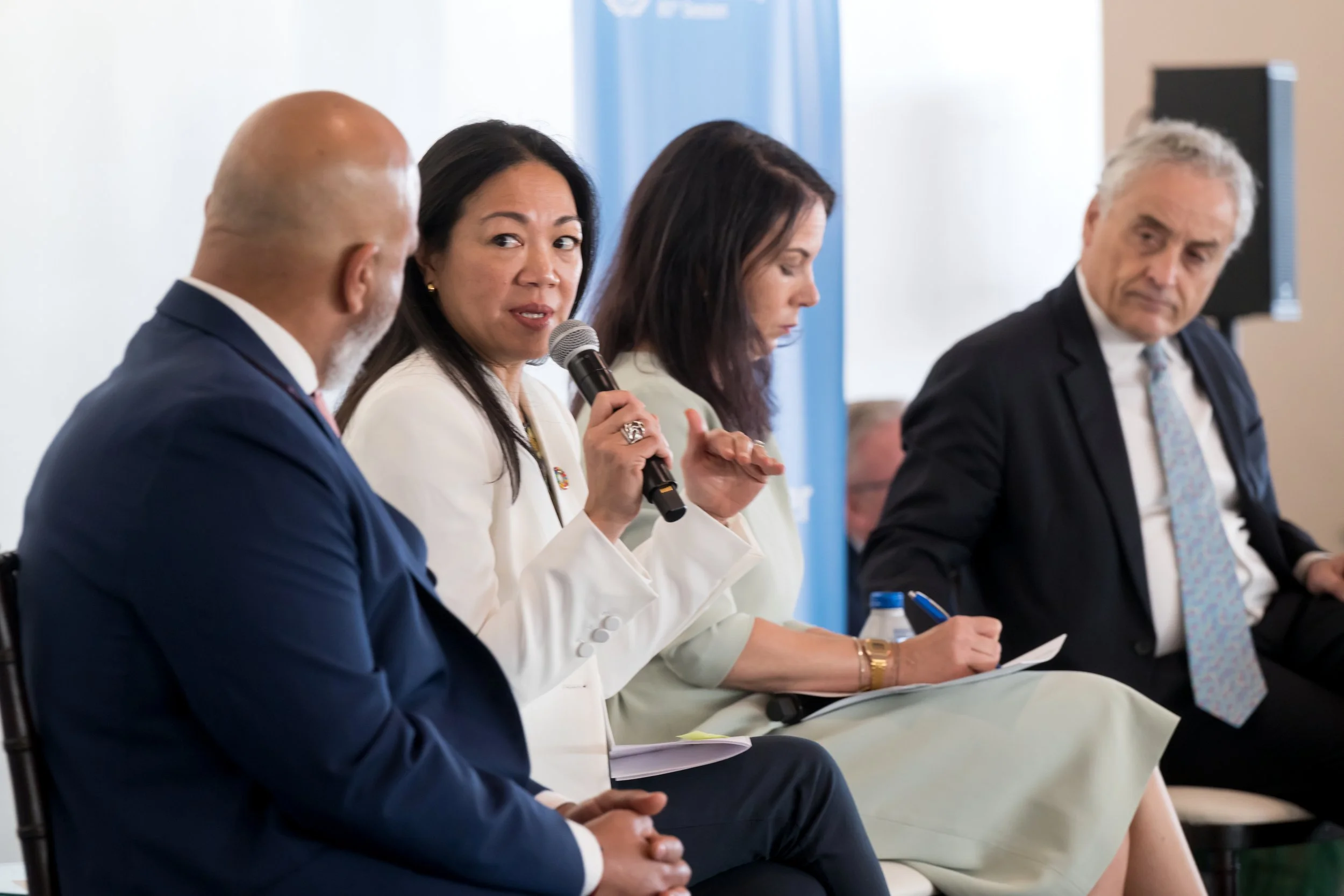
![A panel of four diverse professionals sitting in a row at a formal event or conference, with the woman second from the left speaking into a microphone.]()
UN Charter Day 80th Anniversary, hosted by Annalena Baerbock, President of the UN General Assembly
-
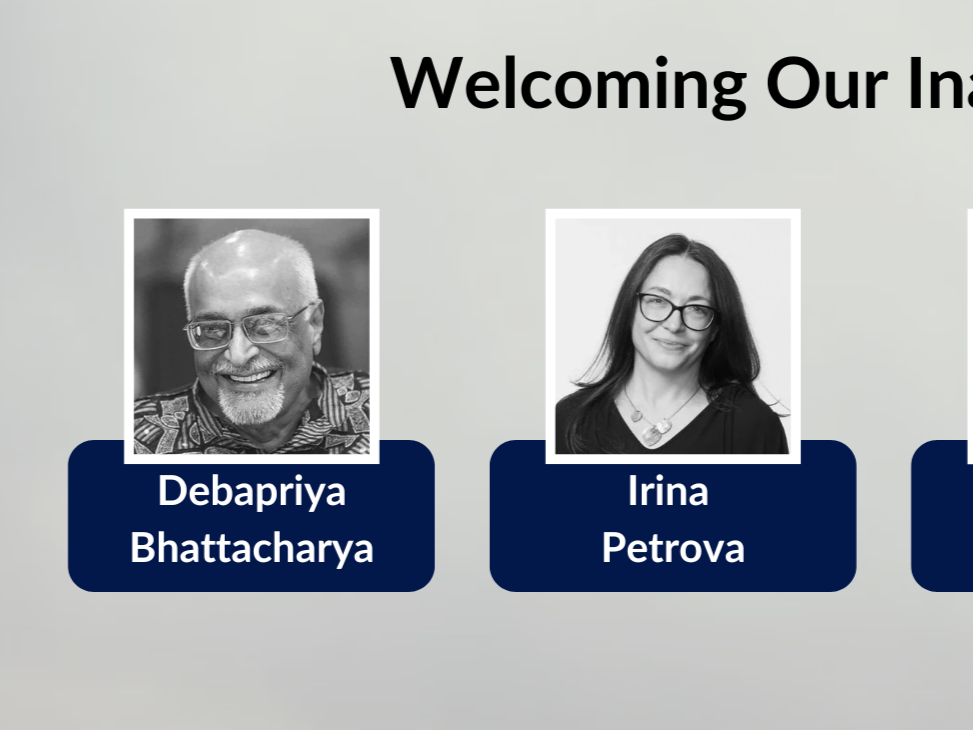
![Individual portrait photos of Debapriya Bhattacharya and Irina Petrova displayed on a presentation slide welcoming audience members.]()
Announcing our Inaugural Board of Directors
-
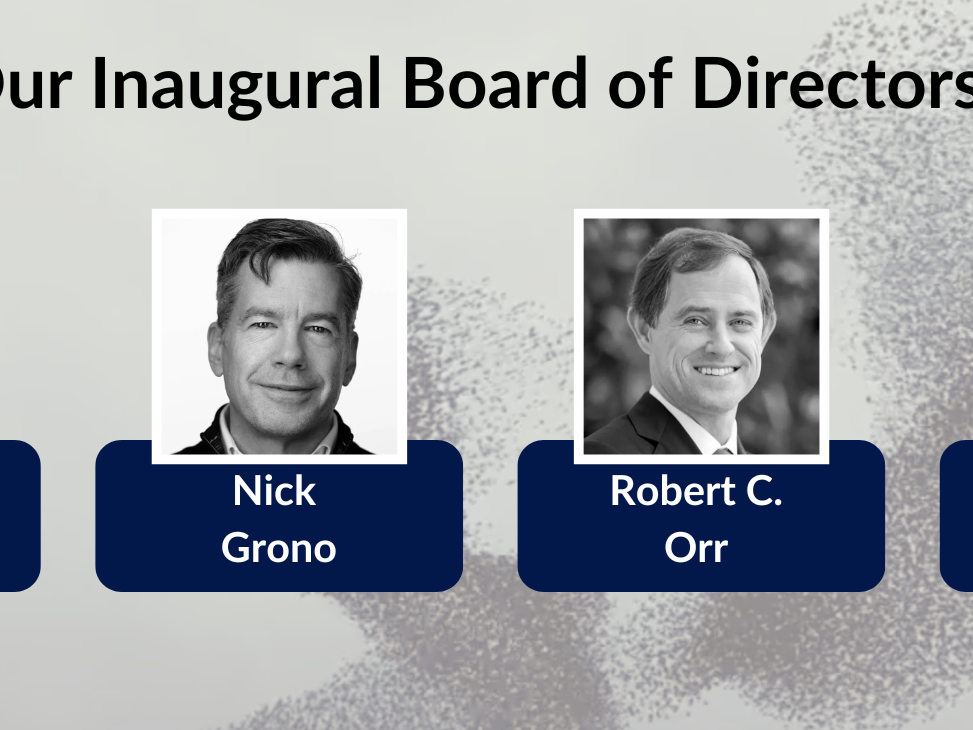
![Black and white photos of Nick Grono and Robert C. Orr with their names under each image, part of an inaugural board of directors announcement.]()
Announcing our Inaugural Board of Directors
-
![Meeting room with people sitting around a table, some using laptops or phones, and plates of food and drinks on the table. A glass wall separates the room from an open office area with desks and windows.]()
UN80 Reform: What aren't we talking about? with UN Ambassadors, NYC
-
![Business meeting in a conference room with multiple people sitting at a large table, engaging with documents, laptops, and tablets, with a city view visible through the windows in the background.]()
UN80 Reform: What aren't we talking about? with UN Ambassadors, NYC
-
![United Nations conference room with delegates seated around a semi-circular table, a large screen displaying information about Italy, and people sitting and listening to the speakers.]()
70th Anniversary of the historic 1955 admission of 16 member states to the UN
-
![Panel discussion at a conference organized by the Camera di Commercio Roma, with five people seated on stage, and a large screen above displaying the event title, speakers, and organizational details.]()
Solferino Academy IFRC: Humanitarian Action in a World of New Realities, Rome
Overview
The year of 2025 was full of seismic events for multilateralism. At the Starling Institute it was a uniquely important moment to make clear that the unfolding events did not somehow mark the end of multilateralism, but instead represented a profound reordering and the initiation of an ongoing transformation whose end state is very much still to be determined.
And while it was sometimes difficult to break through the chatter of daily headlines, the underlying benefits of nations taking a win-win approach to mutual problems and opportunities remains unchanged, and a surprisingly large number of states and actors still recognize that fact and are determined to advance it – but uncertain of the best means to do so.
With sharp moves by the U.S. government to step back from the international institutions and architecture which it helped establish and lead in the wake of World War II, coupled with sharp cut backs in international development assistance from the U.S. and Europe and roiling geopolitical tensions and the erosion of longstanding norms, it is understandable why this felt like a great unraveling in some quarters.
But there has also been quiet, substantial progress on the multilateral front. The Fourth International Conference on Financing for Development reached agreement despite all the turbulence, and the European Union and Mercosur seem to be moving forward provisionally with a historically large free trade agreement. The High Seas Treaty came into force as well.
For the global majority, there is no option other than a working multilateral system and they are working to see progress. As the United Nations struggles with an ongoing budget crisis and the UN80 reform process tries to identify both savings and efficiencies, it was clear that 2025 marked a passage into a new era. Perhaps 2025 is best seen as leaving an old port behind us, as open waters, full of both promise and peril, lie ahead.
Our Impact
Much of our 2025 was centered around two key multilateral processes: the Fourth International Financing for Development Conference (FfD4), and the United Nations Secretary-General’s reform effort under “UN 80.” As with the 2024 Summit of the Future, the Starling Institute worked with partners to uplift Global South perspectives, build trust among diplomats, craft impactful analysis, and shape positive narratives that drive realistic and ambitious results.
The FfD4 process ended formally in July. In the first half of this year, the Starling Institute led a series of strategic interventions to support the FfD negotiations and, particularly, to uplift the voices of the Least Developed Countries (LDCs) and Pacific Small Island Developing States (PSIDS).
We worked to create the connective tissue for these Member States to form collective priorities for the negotiations and provided technical assistance to bridge the gap between their ambition and capacity. After agreement was reached in Sevilla, the Starling Institute worked to get out the word that the process had resulted in significant steps forward through a major feat of diplomatic compromise. We also continued to track developments after Sevilla, and shared those updates with our growing network.
Simultaneously, the Starling Institute aggressively tracked and helped explain the Secretary-General’s UN80 Initiative reform effort as part of our wider effort to renew the multilateral system. Despite an international environment rife with tension, we worked to bring together Member States in informative but private and informal sessions to help them understand the complex process and equities involved in UN80 and build collective understanding and trust among Member States and outside actors about how they should best evaluate and steer such reforms. We also collaborated with partners within, and outside, the UN system to develop relevant analysis.
Overall, our work in 2025 centered around four areas:
Building Trust Among Diplomats through judiciously-designed private meetings connecting Member States with each other and with external experts.
Amplifying Global South Voices through technical assistance and convenings to build collective priorities and strategies.
Developing Impactful Analysis and Commentary through an action-oriented and politically-astute approach.
Shaping Positive Narratives alongside our civil society partners.
Major Events and Convenings
January 26 - 29. Retreat for Global South Countries on Financing for Sustainable Development. Lusaka, Zambia.
In January, the Starling Institute co-hosted a three-day retreat in Lusaka, Zambia with the Permanent Mission of Zambia to the United Nations, and the South African Institute for Policy and Research (SAIPAR). The retreat gathered 70 participants to strategize and respond to the first draft (or “zero draft” in UN nomenclature) of the Financing for Development agreement that was published on January 17. The retreat included ambassadors and lead negotiators from 15 Global South countries, as well as leaders from UN Financing for Development Office, UN Economic Commission for Africa, the African Union, African Development Bank, and World Bank Group.
At the retreat, attendees began to shape a shared vision of what they hoped to see in the agreement. This included practical steps forward on debt sustainability, domestic resource mobilization, international financial architecture reform, international development cooperation, and private sector investment. Given the diversity of developing countries and the wealth of expertise present, the retreat was a vital moment for participants to explore the most difficult issues in depth and build trust and understanding of each other’s positions – a crucial element for success in any complex negotiating process.
February 5. Strategic Discussion on Financing for Development and the Elements Paper: Priorities for LDCs. New York, New York.
On February 5, the Starling Institute hosted a discussion on negotiation strategies and content related to the FfD Zero Draft with LDC experts and a representative of the Office of the High Representative for the Least Developed Countries (OHRLLS.) The meeting was specifically designed to promote a forward-leaning and coordinated negotiating strategy.
February 14. Strengthening the Narrative for ODA and Beyond. Virtual.
On February 14, the Starling Institute organized a virtual side event for the Third Preparatory Committee of FfD4. In the context of declining ODA flows, the discussion explored how communications can help shore-up support for innovative international development cooperation.
Moderated by Starling Institute CEO Minh-Thu Pham, the event included: Ben Phillips, a communications specialist and former Campaigns and Policy Director at ActionAid; Attiya Waris, United Nations Independent Expert on Foreign Debt and Professor at the University of Nairobi; Kate Higgins, the CEO of Cooperation Canada; Ida McDonnell, Head of Development Research at the OECD Directorate for Development Cooperation; and Mahmoud Mohieldin, the United Nations Special Envoy on Financing the 2030 Agenda for Sustainable Development.
March 3. Amplifying LDC Leadership in the FfD4 Negotiations. New York, New York.
On March 3, the Starling Institute hosted an in-depth private luncheon meeting of 34 ambassadors and their lead negotiators from 11 LDCs on critical policy outcomes and how best to amplify LDC Leadership in the FfD negotiations. The discussion explored strategies for LDC’s to secure a successful agreement and advance their priorities in the process.
March 11-12. The Future of Multilateralism in an Era of Upheaval. Tarrytown, New York.
On March 11-12, the Starling Institute and the Carnegie Endowment for International Peace’s Global Order and Institutions Program gathered 30 participants at the Pocantico Center of the Rockefeller Brothers Fund to discuss the global risks and opportunities of dramatic policy shifts, not least in United States foreign policy. The group, including philanthropy, civil society, think tanks, academics, and former government officials, discussed the implications of geopolitical developments for renewing multilateral cooperation.
April 17. “Planning for Success in Sevilla”: 2025 Retreat for Least Developed Countries. Tarrytown, New York.
On April 17, the Permanent Mission of Nepal and the Starling Institute co-convened a retreat for LDC ambassadors and experts at the Tarrytown House Estate on the Hudson, New York. With less than three months remaining before the conference in Seville, this retreat came at a crucial time and provided LDCs a dedicated space to clarify their collective development finance priorities and strategize how best to achieve them within the context of the ongoing negotiations. We were joined by 50 participants, including representatives of 50 percent of all LDCs as well as leaders from the FfD Office and OHRLLS.
April 29. Private Luncheon on the Future of International Development Cooperation in FfD4. New York, New York.
On April 29, the Starling Institute hosted a private luncheon on the future of international development cooperation, on the sidelines of the 2025 Financing for Development Forum. The luncheon brought 20 Member State ambassadors in conversation with development finance experts, to discuss policies that may help offset ODA reductions and increase support to the most vulnerable. Specific topics included reforms to the global financial infrastructure, sovereign debt relief, new partnerships, greater transparency, and local ownership of aid flows.
May 15. Exploring Priorities for the Pacific Small Island Developing States in FfD4 Negotiations. New York, New York.
On May 15, the Starling Institute co-hosted a private breakfast meeting with the Permanent Mission of Tuvalu to the United Nations to gather representatives from the Pacific Small Island Developing States (PSIDS) for a conversation on the negotiations of the FfD4 outcome document. The meeting provided a space for the PSIDS to convene around a joint set of priorities and strategize for the ongoing negotiations.
May 28. From Reflection to Action: Strategies to Support the UN80 Initiative. New York, New York.
On May 28, the Starling Institute convened a private discussion of senior diplomats and UN experts on strategy, planning and support around the reform and budget efforts bundled under the UN80 Initiative. The conversation explored how a coalition of constructive and multilateralist-minded member states, with the support of experienced outside experts, could advance UN80 in constructive ways.
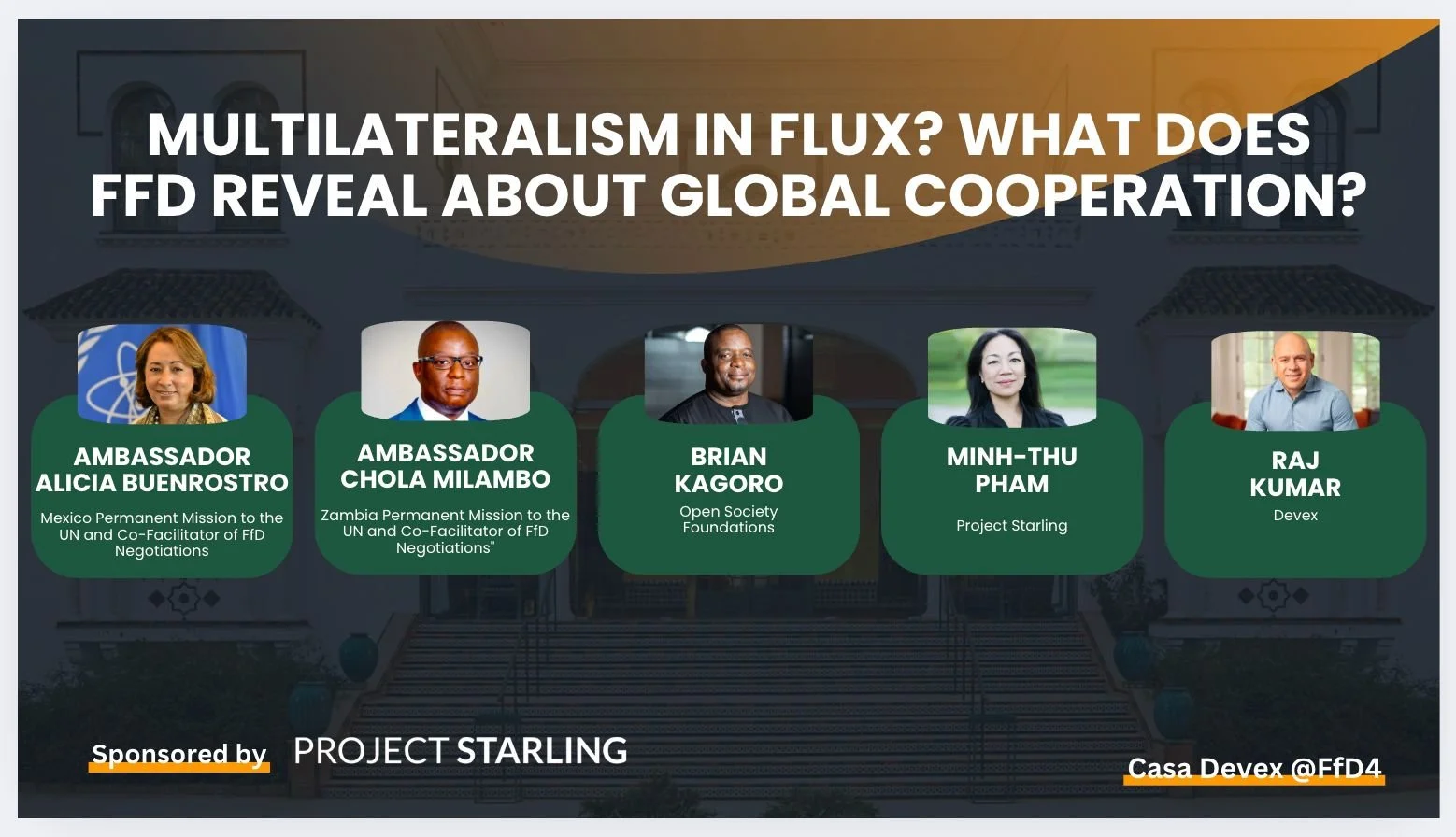
June 30. Multilateralism in Flux? What does the FfD Outcome Reveal about Global Cooperation? Sevilla, Spain.
On June 30, the Starling Institute co-hosted a panel discussion with Devex on the sidelines of the FfD4 Conference in Sevilla, Spain. Reacting to the FfD4 Outcome document on the panel was: H.E. Dr. Chola Milambo, Permanent Representative of Zambia to the United Nations; H.E. Ms. Alicia Buenostro, Deputy Permanent Representative of Mexico to the United Nations; Brian Kagoro, Managing Director of Programs at the Open Society Foundations; and Minh-Thu Pham, Starling Institute CEO and co-founder. The event was moderated by Kate Warren, Executive Vice President and Executive Editor at Devex.
July 30. UN80: Expectations, Opportunities, and Risks. New York, New York & Online.
On July 30, the Starling Institute gathered approximately 80 participants in New York City, and online, to discuss the expectations, opportunities, and risks of the UN80 Initiative. The discussion focused particularly on the contested vision for the reforms under UN80, and the opportunities and risks associated with comprehensive reform in a moment of geo-political tensions and acute budget pressures.
September 3 - 5. UN80 Global: Planning for the Road Ahead. Mexico City, Mexico.
The Starling Institute supported a three-day retreat hosted by the Mexican and Norwegian Ministries of Foreign Affairs that brought together representatives from the members of “UN80 Global,” a coalition of Member States. The Starling Institute assisted with every phase of the event, and was invited to attend a follow-up meeting hosted by the Norwegian Permanent Mission during UNGA High Level Week on September 26.
September 11 - 12. Workshop On the Future of Multilateralism and International Cooperation. Berlin, Germany.
Starling Institute, in partnership with the German Institute of Development and Sustainability (IDOS) and the Robert Bosch Stiftung, convened a small, high-level workshop to mark the beginning of a longer-term initiative focused on shaping the strategic and intellectual direction of future multilateralism in a time of global upheaval through a shared agenda of future collaboration, research, and policy engagement.
September 23. What Would a New Global Order Look Like? New York, New York.
On September 23, the Starling Institute and the Planetary Politics program at New America co-hosted a panel conversation and evening reception on the sidelines of the UN General Assembly High-Level Week. The conversation was opened with brief provocations from: Martín Abregú, Vice President of International Programs at the Ford Foundation; Amitabh Behar, Executive Director of Oxfam International; Richard Gowan, UN and Multilateral Diplomacy Director at the International Crisis Group; Kate Higgins, CEO of Cooperation Canada; Stewart Patrick, Senior Fellow and Director of the Global Order and Institutions Program at the Carnegie Endowment for International Peace; Zane Dangor, Director General of the Department of International Relations and Cooperation, South Africa; and Mariana Mazzucato, Professor of Economics of Innovation and Public Value, University College London. We explored three central questions: What would it mean to re-imagine a new global order? Should a reimagined order be based on shared values? What are the near coalitions that need to happen?
UNGA Engagements.
On September 25, Starling Institute CEO Minh-Thu delivered a keynote address on "How Three Mindset Changes Can Unlock Climate Finance" at the “Impact State of Mind - Investing in the Green Economy” forum organized by Princeton University. On September 26, our Deputy Director Elena Bertozzi spoke at "The Future We Agreed: One Year of the Pact," co-hosted by C4UN and others, framing the FfD4 outcome in Seville as a significant Global South achievement and announcing the launch of a Seville Platform of Action.
October 13 & 23. UN80 Intergovernmental Ad Hoc Working Group on Mandate Implementation Review. New York, New York.
On October 13, Minh-Thu delivered remarks at a technical briefing on mandate creation to the UN80 Informal ad hoc Working Group on the Mandate Implementation Review, on invitation of the Co-Chairs, H.E. Brian Wallace of Jamaica, and H.E. Carolyn Schwalger of New Zealand. On October 23, Minh-Thu was invited again to respond to the Member State questions in reaction to her remarks.
October 22. Building an Effective and Resilient Multilateral Order: How Middle Powers Can Turn Crisis into Opportunity. Washington D.C., United States.
On October 22, the Starling Institute co-hosted a meeting with the Carnegie Endowment for International Peace to launch a new initiative to examine how the world’s middle powers—spanning the Global North and South—can collaborate to design and support a multilateral order that works. The role of middle powers in preserving and modernizing multilateral systems continues to show promise as a path forward.
October 24. Breakfast Briefing on the UN Development System (UNDS). New York, New York.
On October 24, the Starling Institute co-hosted a meeting at expert level with CEPEI on how power and influence are exercised within the United Nations Development System. We were joined by representation from the Permanent Representatives of the United Kingdom, Canada, Brazil, Norway, Zealand, and Mexico.
October 24. UN Charter Day Better Together Dialogue of the President of the General Assembly. New York, New York.
On October 24, the President of the General Assembly, Annalena Baerbock, invited Minh-Thu to moderate the first “Better Together Dialogue” with UN ambassadors on the 80th anniversary of the UN Charter coming into force.
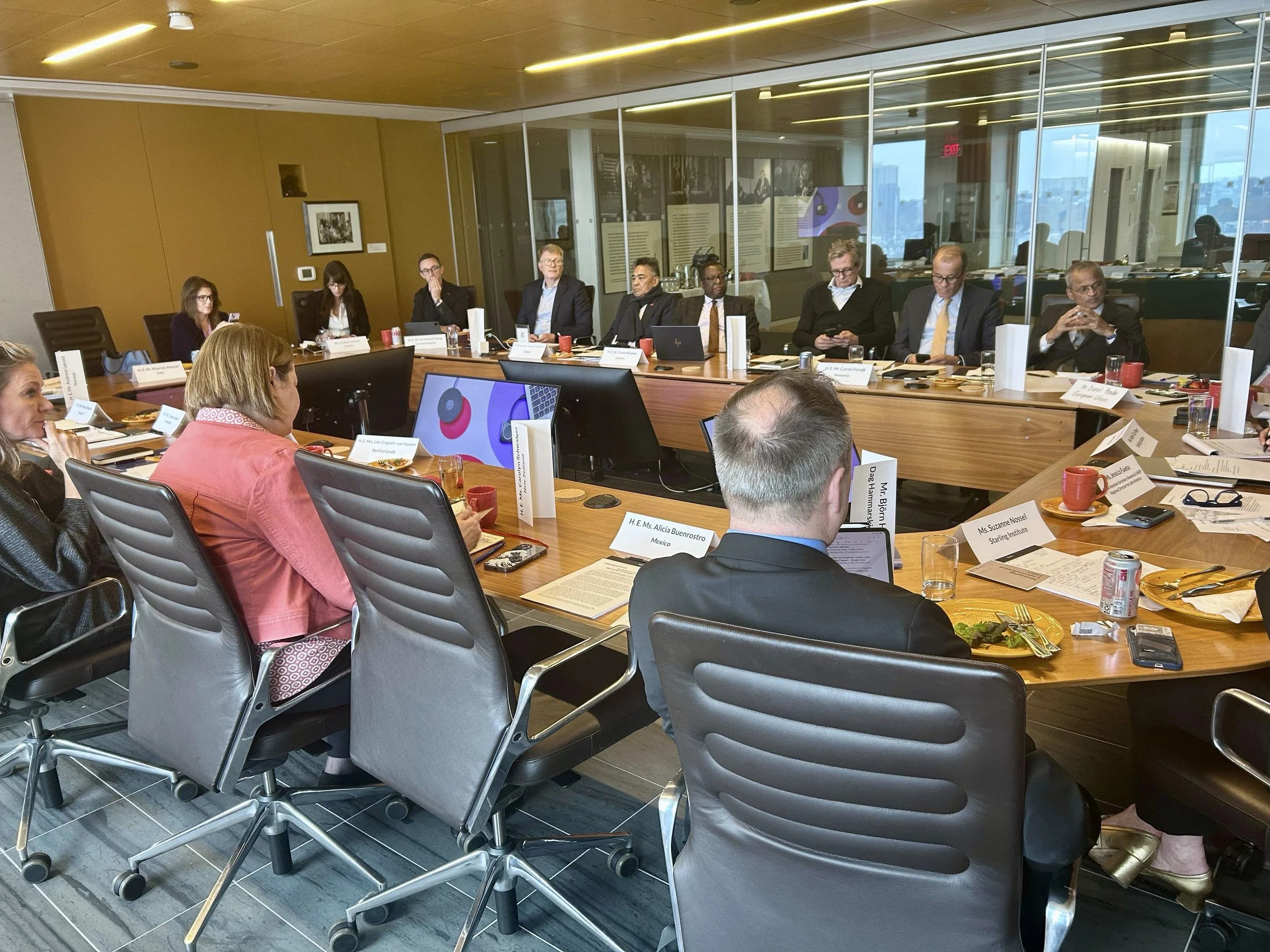
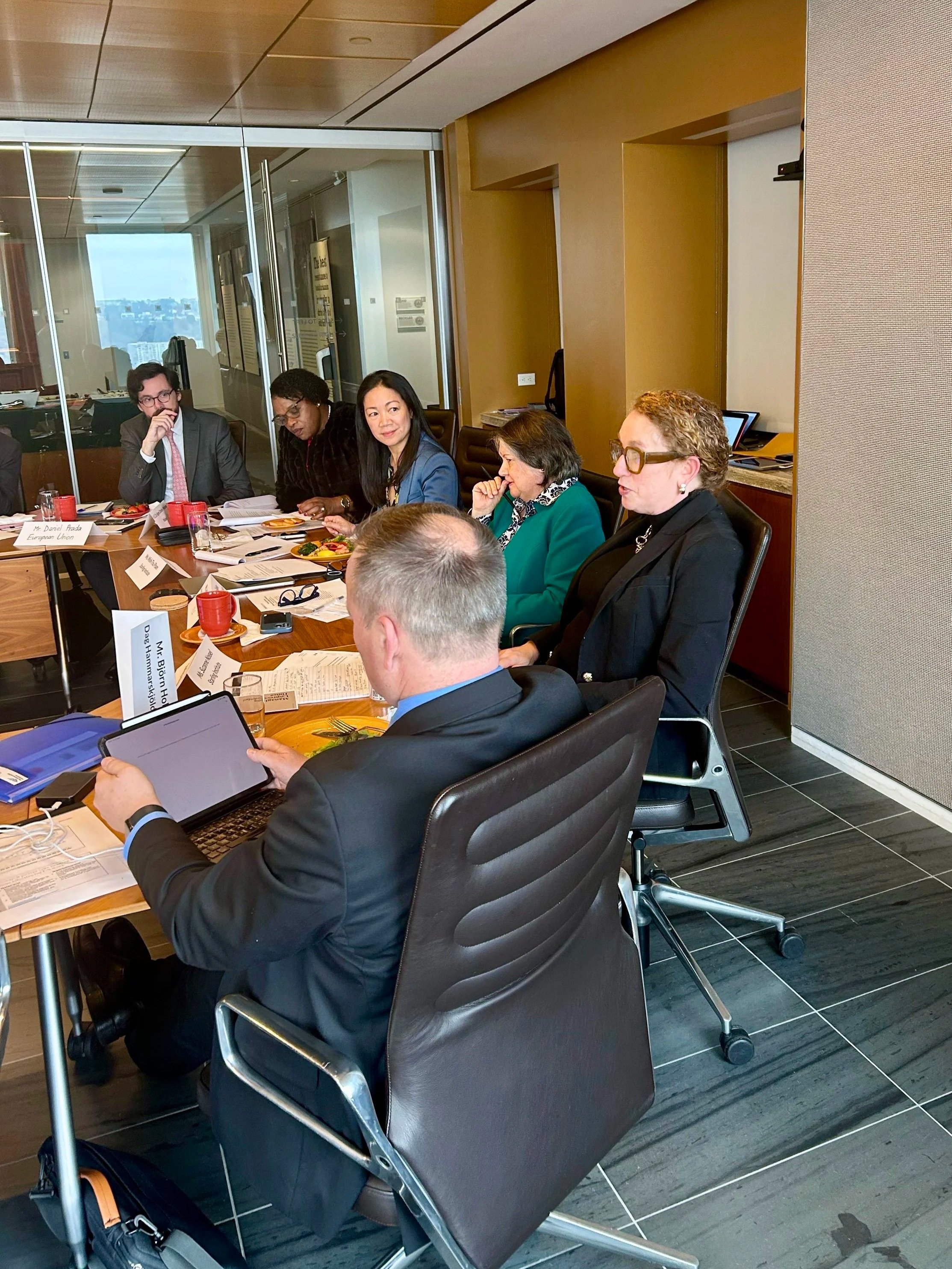
November 21. The Elephant in the Room: Addressing the Core Challenges of UN80 Reform. New York, New York.
On November 21, The Starling Institute gathered 20 Member States, including 17 Permanent or Deputy Permanent Representatives, in New York City for a private, frank discussion on the challenges facing the UN80 Initiative. The group sought to bring the overlooked challenges of the context to the table and to underscore the importance of a shared vision for the end state for reform and the functions that Member States want the United Nations to play. There was broad agreement that reform and budget issues will continue to loom large for the next Secretary General as well.
December 8-12. North South Futures Forum. New York, New York.
In December, Starling joined the inaugural meeting of North South Futures Forum, a Global Network for Progressive Multilateralism, hosted by the Friedrich-Ebert-Stiftung. The distinguished group met in New York to “diagnose the state of the world, debate bold reforms, and chart a progressive vision for multilateralism in an era of geopolitical upheaval.”
December 9. UKICE Lunch Hour: Multilateralism in Crisis. Virtual.
On December 9, Minh-Thu was invited to speak at the UK in a Changing Europe Lunch Hour to mark the launch of their recent report, in which we wrote a chapter. Moderated by Professor Anand Menon, the panel explored the main challenges facing the multilateral system, what could be done to strengthen the systems, and how the UK and Europe can uphold their shared interests in a struggling system.
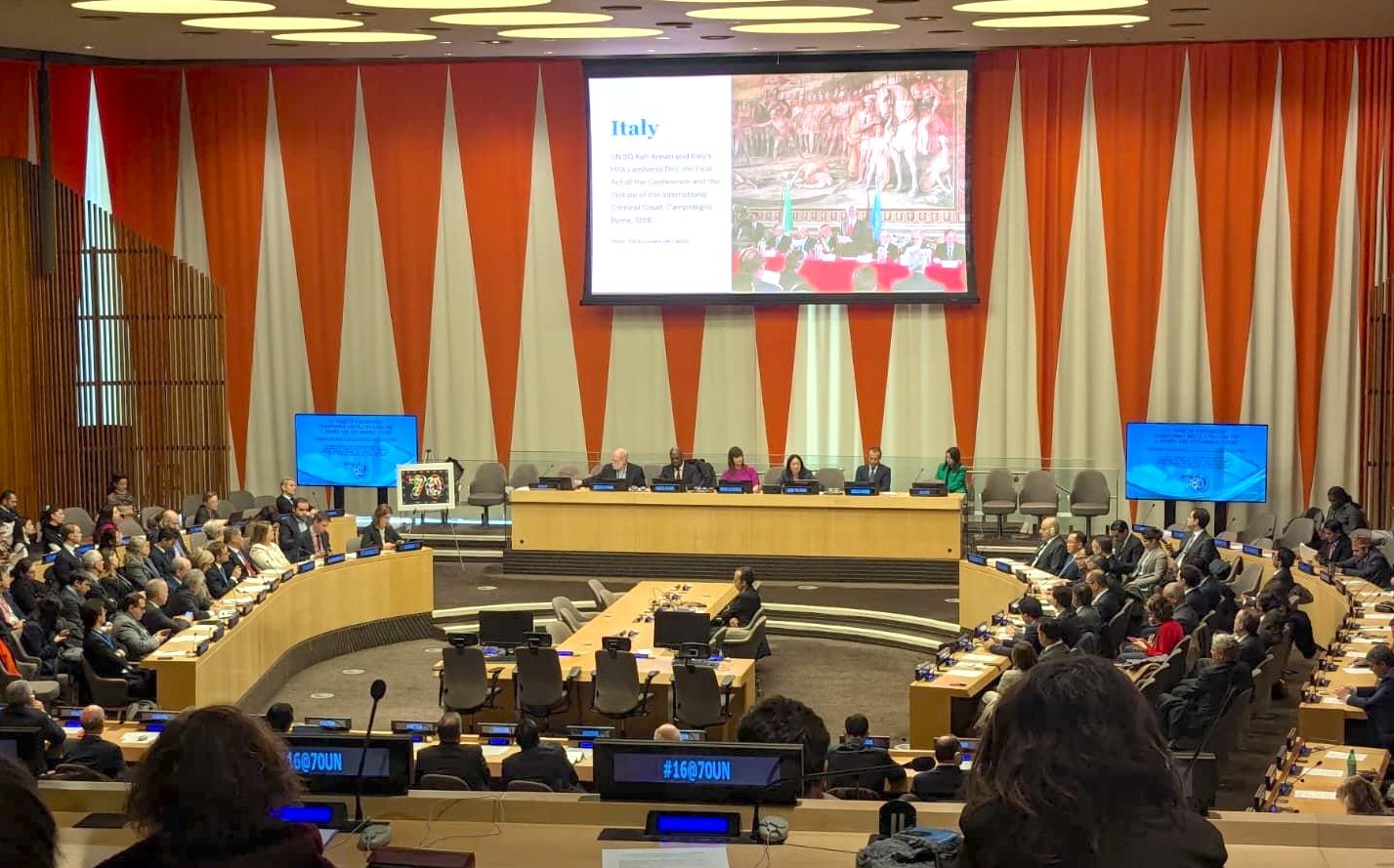
December 11. 70 Years of Partnership: Championing Multilateralism for a Shared and Sustainable Future. New York, New York.
The Ambassadors of 16 member states, Albania, Austria, Bulgaria, Cambodia, Finland, Hungary, Ireland, Italy, Jordan, Lao PDR, Libya, Nepal, Portugal, Romania, Sri Lanka, and Spain to the UN invited Minh-Thu to make remarks at their event marking the 70th anniversary of their historic 1955 admission to the UN. Minh-Thu appealed to them about tackling the most important challenges facing the UN.
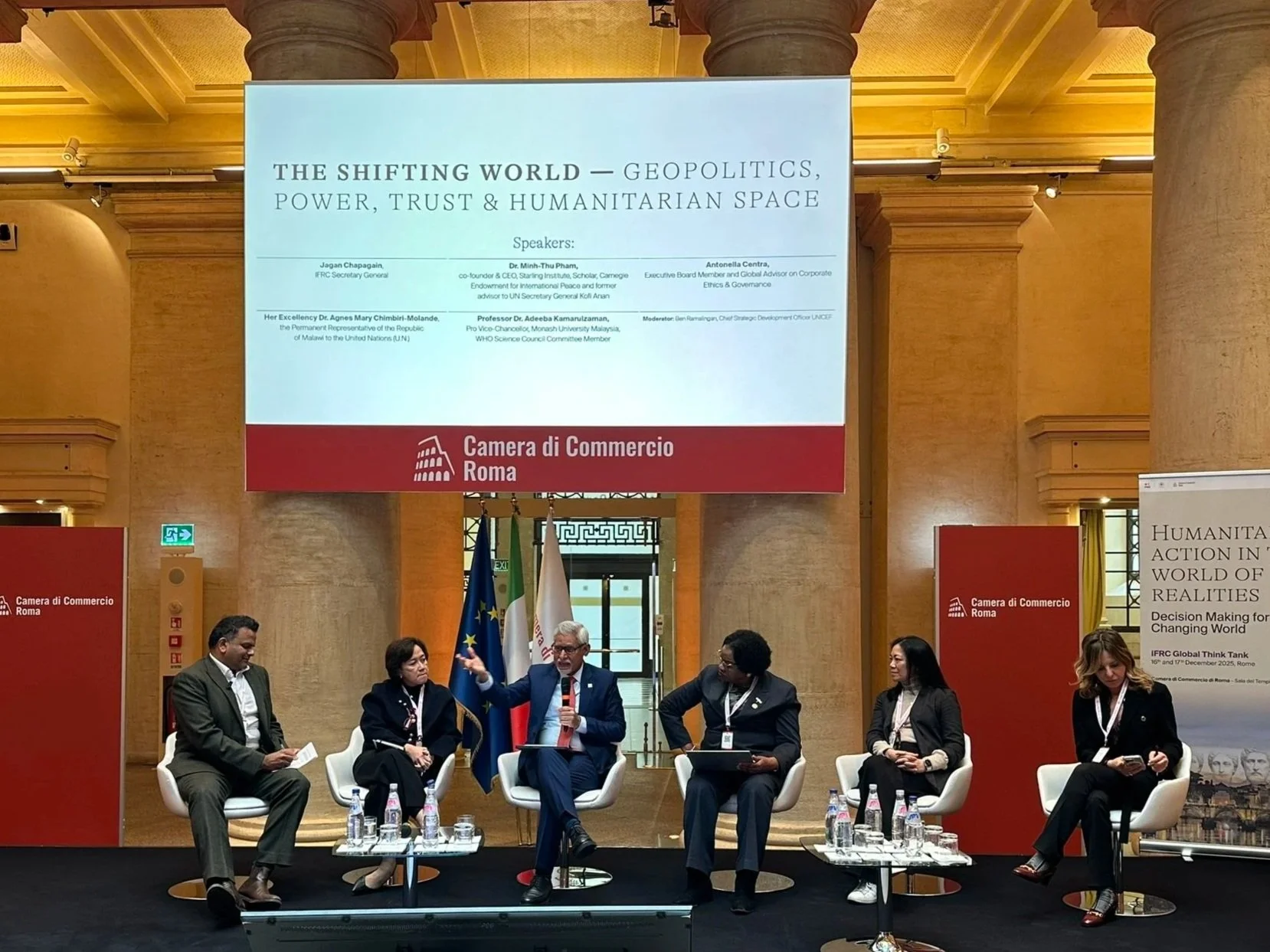
December 16. International Federation of Red Cross and Red Crescent Societies (IFRC) Global Think Tank. Rome, Italy.
Minh-Thu spoke on a panel on “The Shifting Global Landscape: Geopolitics, Power, Trust, and Humanitarian Space” for the IFRC’s Solferino Academy Global Think Tank in Rome, which brought together leaders from Red Cross and Red Crescent National Societies, IFRC senior leadership, governments, multilateral institutions, academia, and the private sector.
December 16. The Helms-Biden Playbook: Lessons from a Previous Impasse in the UN budget and U.S. - UN Relations. Online.
The Starling Institute hosted a virtual event to reflect on and explore the lessons from Helms-Biden, the agreement that ended an earlier and protracted standoff about the United States paying its UN dues, and consider paths to rebuilding the U.S.-UN relationship and address the UN’s financial crisis. Event speakers included: Robert Orr, Mark Lagon, Suzanne Nossel, and Brett Schaefer.
Germany
Guinea
Iceland
Iraq
Ireland
Italy
Japan
Jamaica
Kiribati
Kuwait
Lao DPR
Lesotho
Liechtenstein
Madagascar
Malawi
Mali
Mauritania
Mexico
Micronesia
Morocco
Mozambique
Myanmar
Namibia
Nauru
Tonga
Tuvalu
Uganda
United Arab Emirates
United Kingdom
Writing, Media & Analysis
Throughout 2025, the Starling Institute released a series of reports and analysis on key issues ranging from the overall state of multilateral cooperation to more granular analysis including the details of how the UN80 process was structured, key challenges for the next Secretary General, and lessons to be taken from the creation of UN Women for ongoing discussions on consolidating agencies within the United Nations System.
These reports and analysis were further bolstered by media commentary and appearances from the team which are also detailed below.
April 16. “The Return of Landmines: A Symbol of Eroding Global Norms.” PassBlue, Opinion by Elena Bertozzi.
May 30. “What is Financing for Development 4 and why is it a big deal?” by Jesse Chase-Lubitz, Devex, quoting Minh-Thu Pham.
June. “Shifting Sands of Multilateralism: Change in a New International Order.” A Starling Institute Report by John Norris.
June 17. “Taking Payout Strategy a Step Further.” Stanford Social Innovation Review, by Jacob Harold.
June 18. “US abandons Financing for Development conference,” by Colum Lynch, Devex, quoting Minh-Thu Pham.
June 20. “Some Things We Don’t Do Anymore.” NPR’s This American Life. Interview with John Norris.
July. “UN80: An Explainer”. A Starling Institute Report by John Norris.
July 1. “Cuts & Consequences.” Elmira Bayrasi, Interruptrr. Interview with Minh-Thu Pham.
July 16. “The Compromiso de Sevilla Marks a New Path for Development Finance.” Carnegie Endowment for International Peace, by Minh-Thu Pham.
September 3. “Bridging the Sevilla FfD Agreement and the Addis Declaration for Enhanced Climate Finance in Africa.” Starling Institute Update.
September 10. “Emerging Member State Positions on UN80.” Starling Institute Update.
September 18. “The UN’s Grim Future.” The Economist, quoting Minh-Thu Pham.
September 28. “After 80 years of carrying heavy burdens and reaching the brink of danger, can the United Nations still be the United Nations.” Lianhe Zaobao (Singapore), Quoting Minh-Thu Pham.
September 27. “A Decade After Addis Ababa Pledges, Africa Faces Debt Strains, Dwindling Aid.” Addis Fortune, commentary by Gabriel Mekbib.
October. “Priorities for the Next UN Secretary-General.” Starling Institute White Paper by John Norris and Joshua Wells.
October 15. “A Q&A with Minh-Thu Pham”. Sébastien Thibault, Foreign Policy Analytics. Part of the Global Governance Reimagined Series.
November. “Lessons from the Creation of UN Women for the UN80 Reform Effort.” Starling Institute White Paper by John Norris.
December 9. “UN Reform”.Chapter by Minh-Thu Pham in “The Crisis in Multilateralism: What Can Europe Do?” UK In a Changing Europe.
Institutional Changes
We took a big step in 2025. Late in the year, we formally changed our name from Project Starling to the Starling Institute. This was more than a name change – it reflects how far we have come. It is a reflection that our approach has gained real traction, and we’re ready for the next phase. At the same time, the Starling Institute became a non-profit organization under 501 (c) (3) status.
We also announced our inaugural Board of Directors: Minh-Thu Pham, Debapriya Bhattacharya, Nick Grono, Robert C. Orr, and Irina Petrova.
Debapriya Bhattacharya is a macro-economist, public policy analyst, and author. Currently, he is a Distinguished Fellow at the Centre for Policy Dialogue in Dhaka, Bangladesh where he served as its first Executive Director. He is also a member of the CPD Board of Trustees. He is the former Ambassador and Permanent Representative of Bangladesh to the World Trade Organization (WTO) and UN Offices of Geneva and Vienna, and in 2013, he founded Southern Voice, a network of more than 70 think tanks across Africa, Asia, and Latin America.
Nick Grono is the founding CEO of the Freedom Fund, an organization investing in frontline organizations and movements to drive a measurable reduction of modern slavery in high-prevalence countries and industries and author of the acclaimed book, “How to Lead Nonprofits”. Prior to the Freedom Fund, he was the inaugural CEO of the Walk Free Foundation, and the Deputy President and Chief Operating Officer of the International Crisis Group, the world’s leading conflict prevention NGO.
Irina Petrova is General Counsel at Natural Resources Defense Council, Inc. In this role, she provides strategic counsel on institutional risk management, governance, and compliance with legal and regulatory frameworks across all areas of advocacy and operations. She leads the in-house legal team, which provides support to the organization across the full spectrum of issues facing not-for-profit organizations and helps to foster and maintain ethical and transparent organizational practices. Prior to joining NRDC, Irina was an attorney at Simpson Thacher and Bartlett LLP, where she focused on commercial real estate, mergers and acquisitions, and securities law. She is a graduate of Georgetown University Law Center and American University.
Robert C. Orr serves as a professor at the University of Maryland School of Public Policy, where was previously the Dean, and as Special Advisor to the UN Secretary-General on Climate Change. He also served as the assistant secretary-general for strategic planning in the Executive Office of the United Nations secretary-general from 2004 to 2014. He also served as deputy to the United States ambassador to the United Nations and director of global affairs at the National Security Council where he was responsible for peacekeeping and humanitarian affairs.
Also in 2025, the Starling Institute welcomed new key team members who bring diverse experience, deep expertise, and a shared commitment to multilateralism.
John Norris, Senior Advisor. Before joining the Starling Institute, John served in a number of senior roles in government, international institutions, and nonprofits. Most recently, he was a Policy Adviser in the Office of the President for Global Policy and Advocacy at the Gates Foundation.
Tanya Mendez joined in March as Operations and Events Manager. Contributing extensive administrative experience and a commitment to strategic thinking, Tanya leads and augments our operative capacity and helps us turn ideas into action.
Harriet Osias joined us in September as Scheduler and Assistant to CEO Minh-Thu Pham after a distinguished career at the United Nations. Harriet served as scheduling officer to three Presidents of the General Assembly and worked in the Executive Office of four Secretaries-General. She brings unparalleled UN experience to help us work at our best.
Looking Ahead to 2026
As the first few weeks have shown, 2026 is likely to be every bit as tumultuous a year for multilateral cooperation as was 2025. Despite the uncertainty, the Starling Institute remains committed to upholding the basic norms and principles of international cooperation while working with partners to renew and revive the multilateral system. We will continue to capitalize on opportunities in the multilateral calendar as we support long-term thinking about the future of international cooperation.
The selection of the next Secretary-General, to take office on January 1 2027, is one such opportunity. The UN needs a talented, principled leader to take forward the reform agenda, defend the principles of the Charter, and lead the organization through a period of great turmoil to emerge stronger. The Starling Institute will work with partners, through convenings and analysis, to support the selection process and efforts to select a suitable candidate.
Working with partners, the Starling Institute will chart pathways to modernize multilateral cooperation, encourage a greater voice for small and middle powers, and shape institutions that deliver for all while advancing and renewing fundamental norms in the international system.
Member States at 2025 Starling Convenings
Below is a list of some of the Member States represented in Starling Institute discussions during 2025 to provide a general sense of our reach and inclusivity.
Afghanistan
Angola
Armenia
Australia
Bangladesh
Barbados
Belgium
Botswana
Burkina Faso
Burundi
Cambodia
Canada
Chile
Colombia
Costa Rica
Denmark
Djibouti
Estonia
Eritrea
Ethiopia
Finland
Fiji
France
Gambia
Spain
Tanzania
Thailand
Timor-Leste
Togo
Nepal
Netherlands
New Zealand
Niger
Nigeria
Norway
Pakistan
Palau
Papua New Guinea
Peru
Poland
Philippines
Romania
Russian Federation
Rwanda
Saint Vincent and the Grenadines
Senegal
Sierra Leone
Singapore
Solomon Islands
South Africa
Sweden
Switzerland
United States
Uruguay
Vanuatu
Zambia
The European Union